Hardrace USA rear lateral link trailing toe arm ANT10 Scion tC

hardrace usa rear toe tie vs OEM toyota
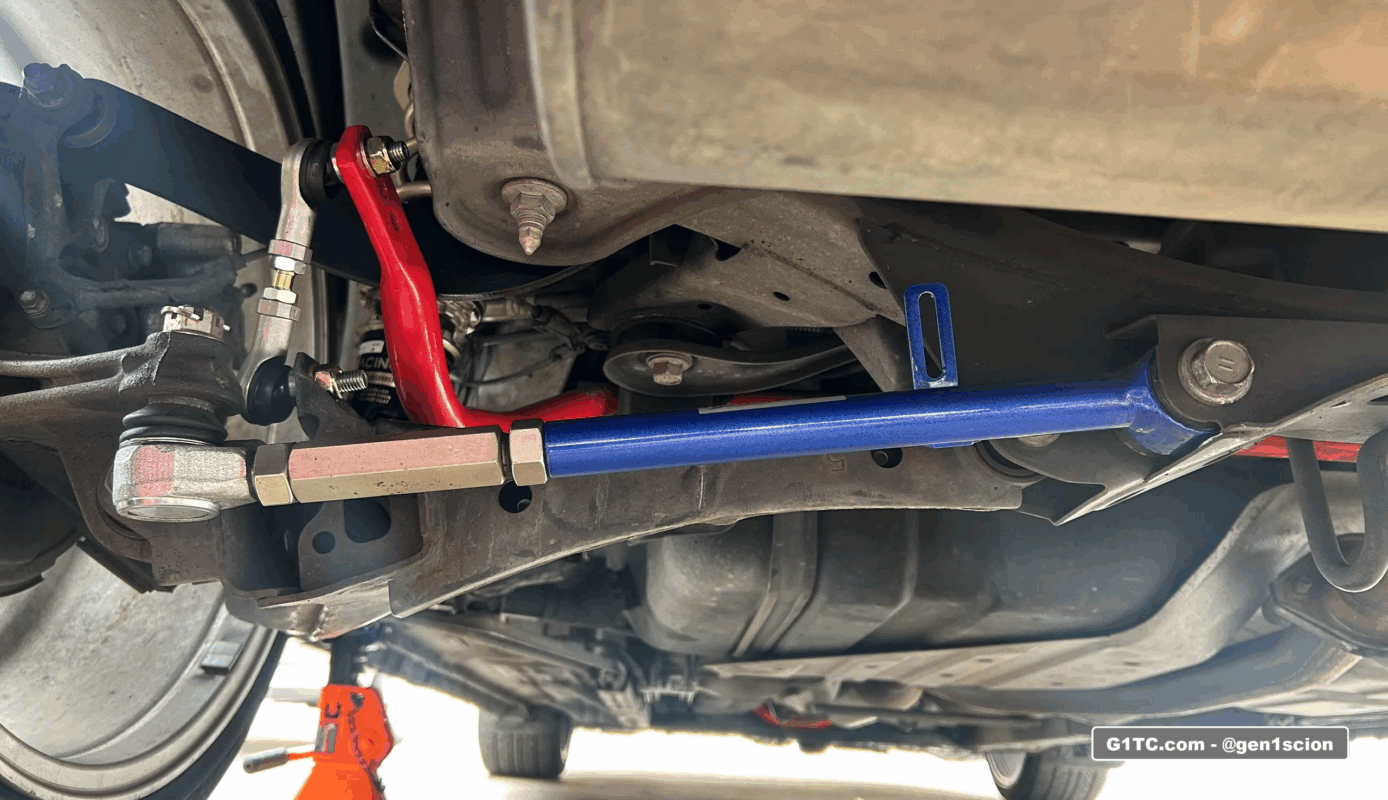
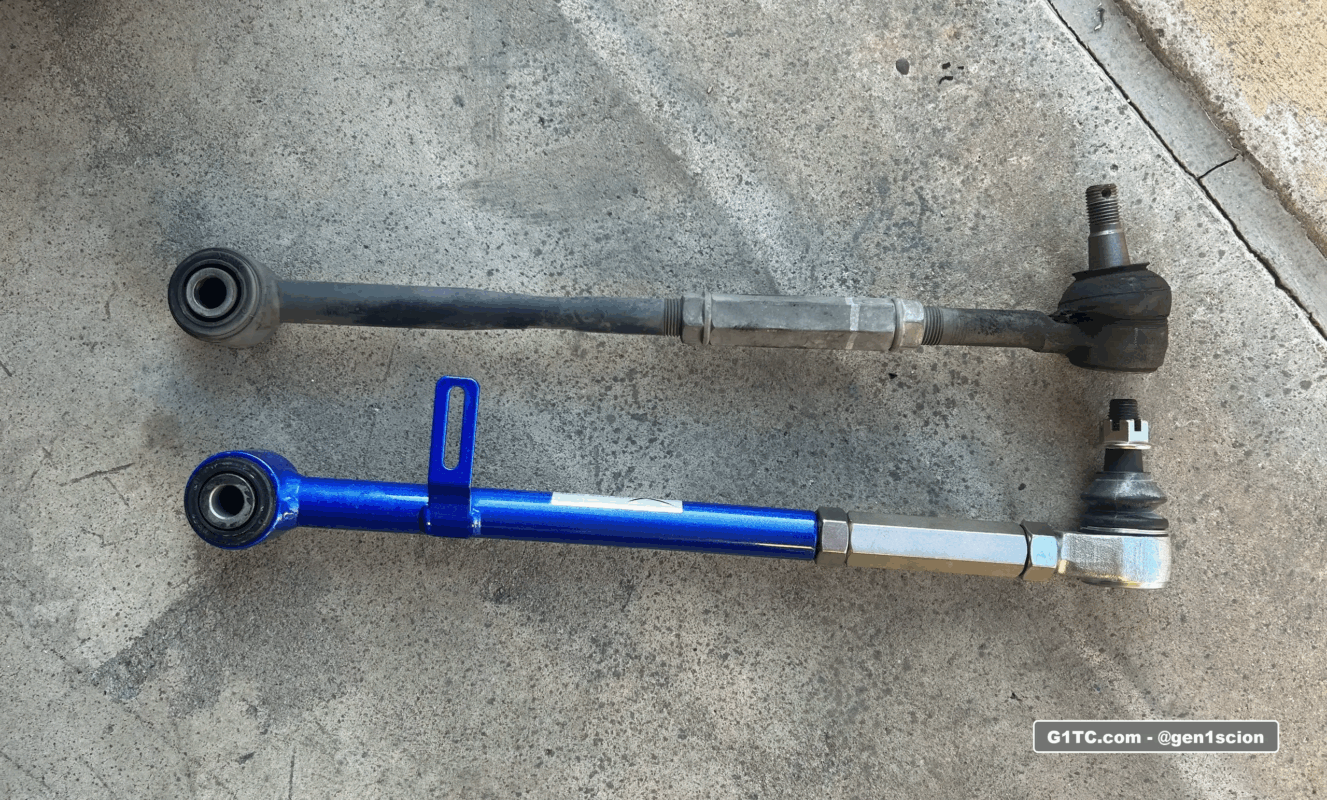
In this article I install a pair of Hardrace USA rear tie rod kit p/n Q0511 on my 2006 Scion tC. Rear tie rods are used to adjust toe in/out and stabilize the rear knuckle to the subframe.
 
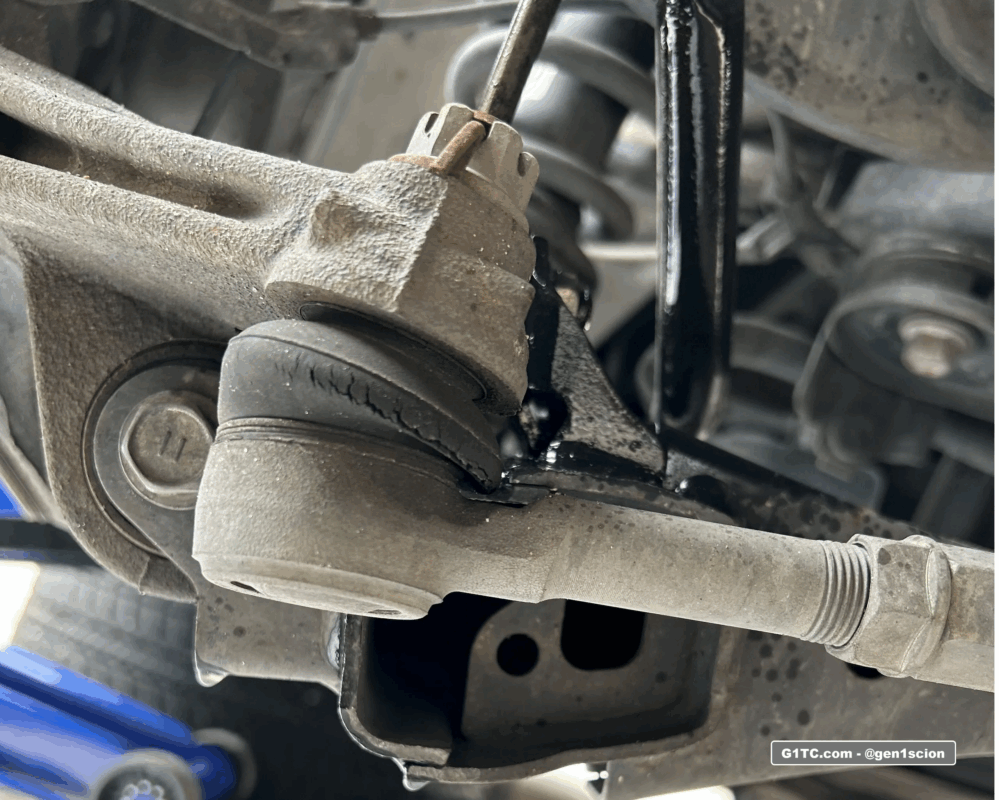
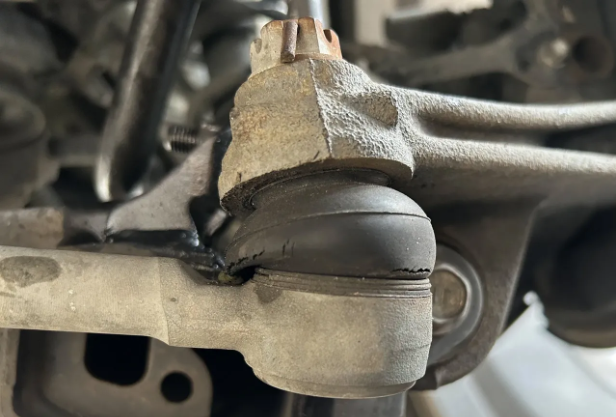
For starters, my original tie rods had almost 230k miles of wear on them. The tie rods themselves were in good shape, but the boots were all shot. I’m considering this both a suspension upgrade and a maintenance item.
 
TC1 Scion lower front ball joint worn out


Alternative replacement options

Alternative replacement options are made by Dorman and Febest.
 
 
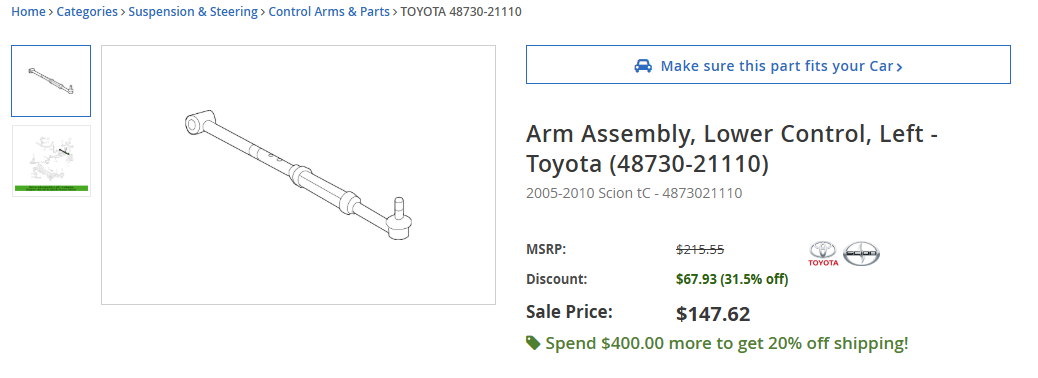
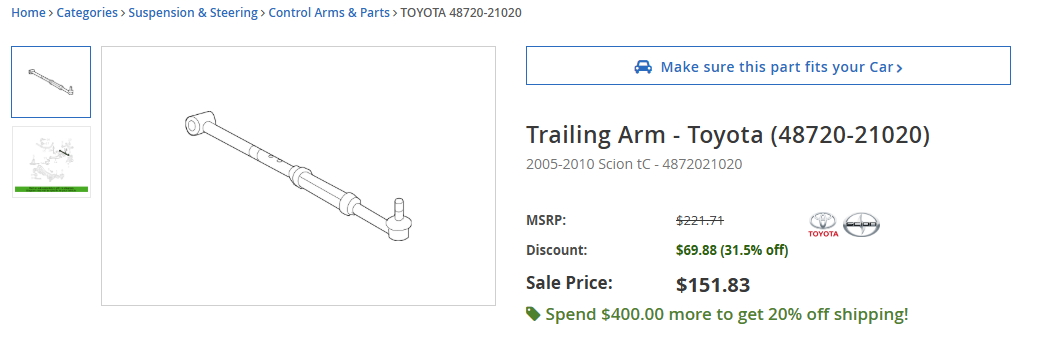
Febest does not have a left/right designation, but it’s important to note that OEM replacements DO have a left and right designation, like the Dorman.

OEM Part numbers

Hardrace USA trailing arms

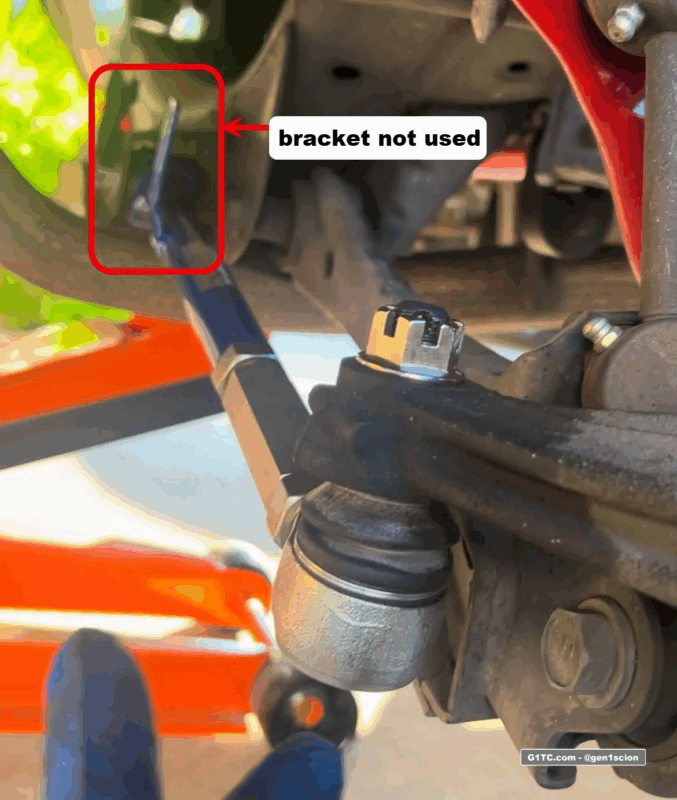
The Hardrace USA trailing arms were $237.61 (no tax, $39.61 shipping). there’s only one US distributor best I can tell. They appear to be designed like the Febest. That is, no left/right designation and I didn’t find any visible markings on the Hardrace part that would indicate that. Like the Febest, the Hardrace includes a bracket welded on. I’m assuming this is for use on other vehicles where it’s compatible. I’m guessing there is some type of line or cable that is secured on that bracket. The bracket is not used on the Scion TC. You can cut it off or leave it on. I left mine on.


Installation

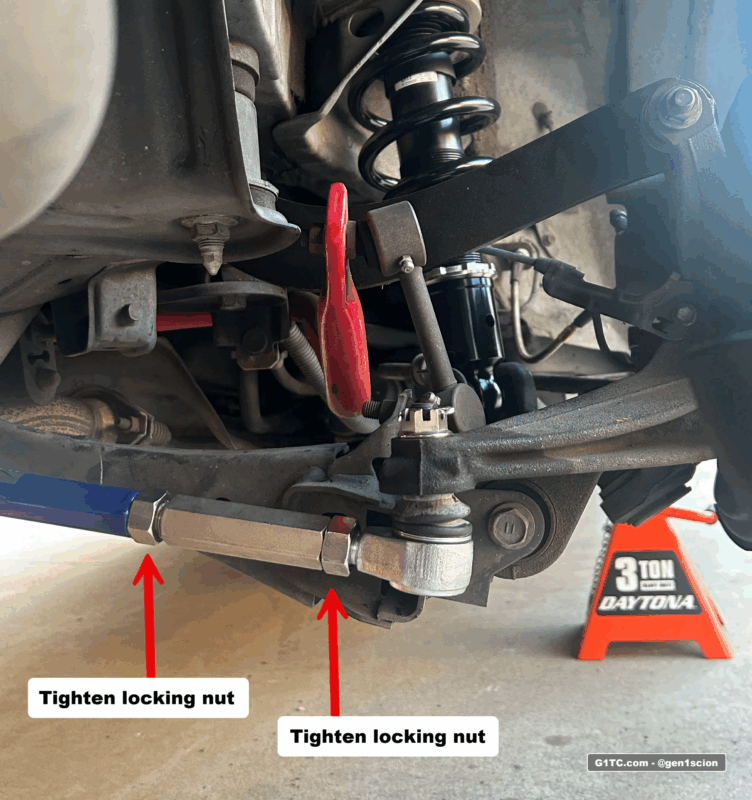
Installation is pop and swap. 17mm at the castle nut, 19mm at the subframe. I would recommend getting an alignment after install. This part controls your toe in/out of the rear, so you don’t want abnormal tire wear or handling. You want this value to be within manufacturer spec. I’m not done with my entire suspension setup, so I’m going to get the alignment later. For now, I just eyeball it. Measure the eyelets center to center. Get your alignment done eventually. The bracket is not used. Don’t forget to tighten your locking nuts at the adjuster.
2005-2010 Scion tC ANT10 hardrace usa rear toe tie bar
hardrace usa rear tie bracket ANT10 2005-2010 scion tc
rear suspension setup 1st gen scion tc hardrace usa tie rod

Benefits of new rear lateral toe arms

Rear toe alignment plays a major role in straight-line stability, cornering behavior, and tire wear, and the trailing arms are what physically hold that alignment in place. When those arms or their bushings wear out, rear toe can drift out of spec—even if the car has been “aligned.”

One of the biggest benefits of replacing worn rear trailing arms is improved tire life. Excessive toe, especially toe-out, causes tires to scrub as they roll, leading to rapid and uneven wear. Many drivers replace rear tires repeatedly without realizing the root cause is worn trailing arm bushings that won’t hold alignment under load.

Another major advantage is better stability and handling. Worn trailing arms allow the rear wheels to move slightly during acceleration, braking, or cornering. This can make the car feel loose, unpredictable, or twitchy at highway speeds. New trailing arms restore proper geometry, helping the car track straight and feel planted through turns.

Replacing rear trailing arms also improves alignment accuracy. An alignment shop can only set toe correctly if the suspension components can hold that position. Fresh arms ensure the alignment stays where it’s set, rather than shifting as soon as you drive away.

Overall, replacing rear trailing arms that control toe is a smart maintenance upgrade that improves safety, handling, and long-term tire costs—especially on higher-mileage vehicles.


Disclaimer | Report Error