
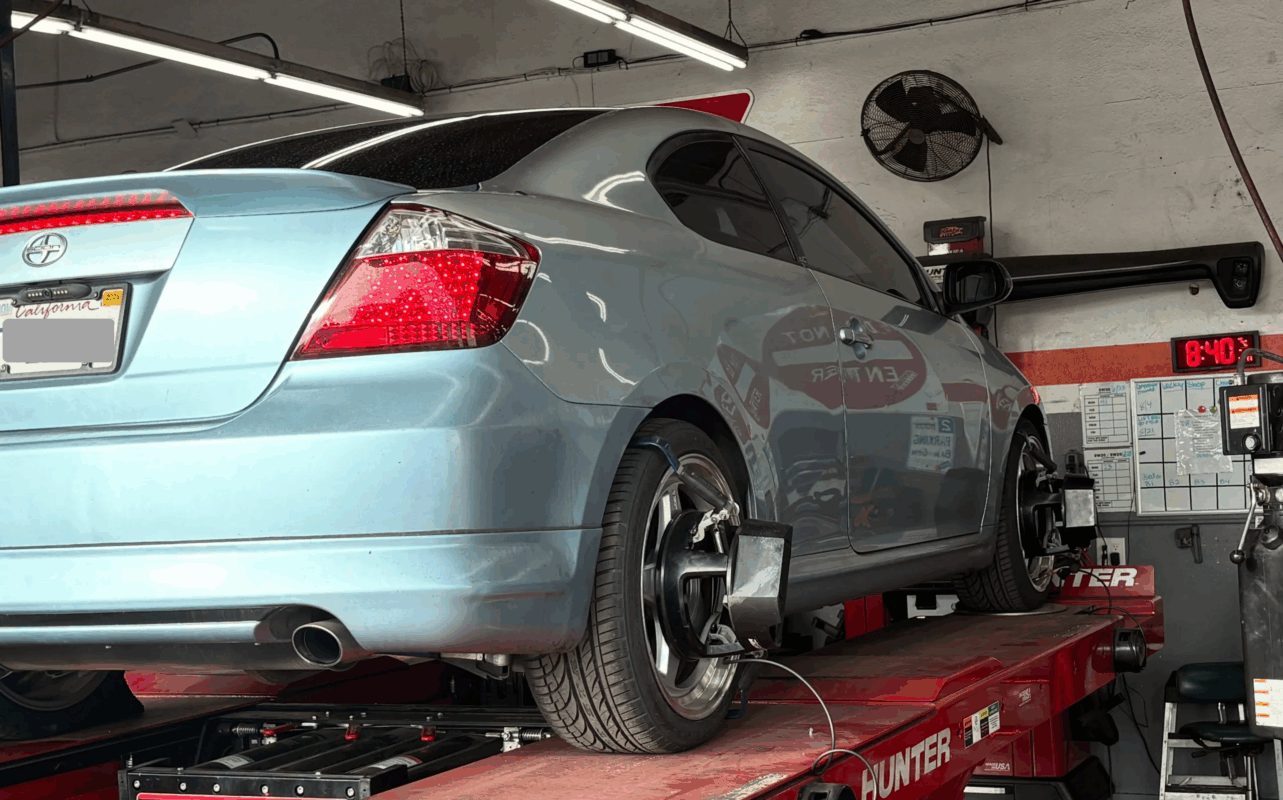
2005-2010 Scion tC Camber Caster Toe SAI Factory Ranges
Wheel alignment is one of the most important aspects of vehicle maintenance, directly affecting handling, tire wear, and overall driving safety. Three key measurements—camber, caster, and toe—determine how your tires make contact with the road.
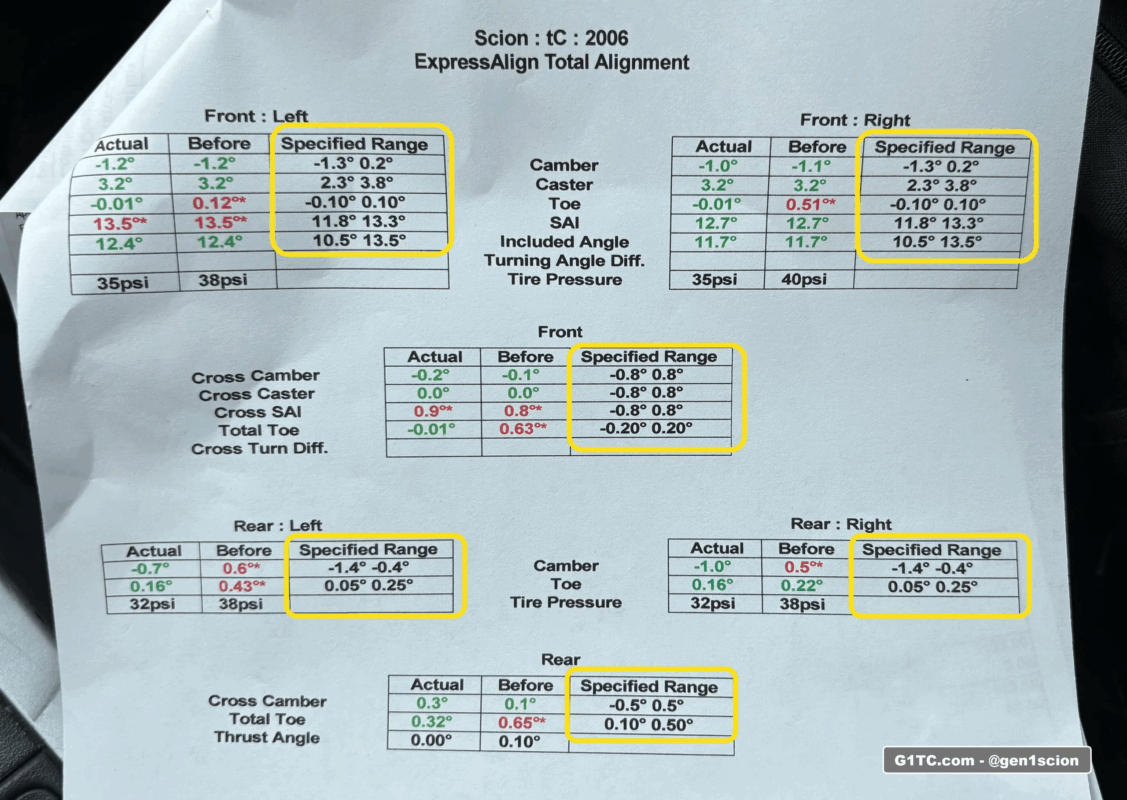
FRONT
-
- CAMBER -1.3° to 0.2°
- CASTER 2.3° to 3.8°
- TOE -0.10° to 0.10°
- SAI 11.8° to 13.5°
REAR
-
- CAMBER -1.4° to -0.4°
- TOE 0.05° to 0.25°
DIY Wheel Alignment
It’s possible to do DIY alignment jobs with average tools. If you’re in a pinch (at a track, on the road or somewhere an computerized alignment isn’t feasible) here are some tools from Amazon that might be able to get you by until you can have the pros do it:
- DIY Car alignment bracket tool kit
- DIY Magnet gauge alignment pillar tool
- Premium DIY camber caster alignment tool kit
Understanding Camber, Caster, and Toe
These three angles define how your wheels sit and steer relative to the car. Correct alignment affects tire wear, straight-line stability, steering feel, and cornering grip.
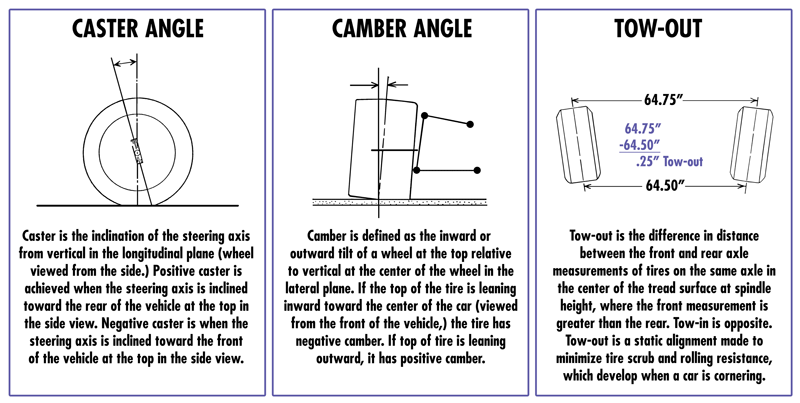
Camber refers to the tilt of the wheel when viewed from the front or rear of the vehicle. If the top of the wheel leans inward toward the car, it’s called negative camber; if it tilts outward, it’s positive camber. A slight amount of negative camber can improve cornering performance by maximizing tire contact during turns. However, too much can cause uneven tire wear on the inner edges. Positive camber, often used in heavy-duty vehicles, provides better straight-line stability but can reduce cornering grip.
Effects of Lowering You Car
-
Install camber kits (adjustable control arms or camber bolts).
-
Have a professional alignment done after any height adjustment.
-
Aim for balanced camber: slightly negative for performance, but not extreme for daily driving.
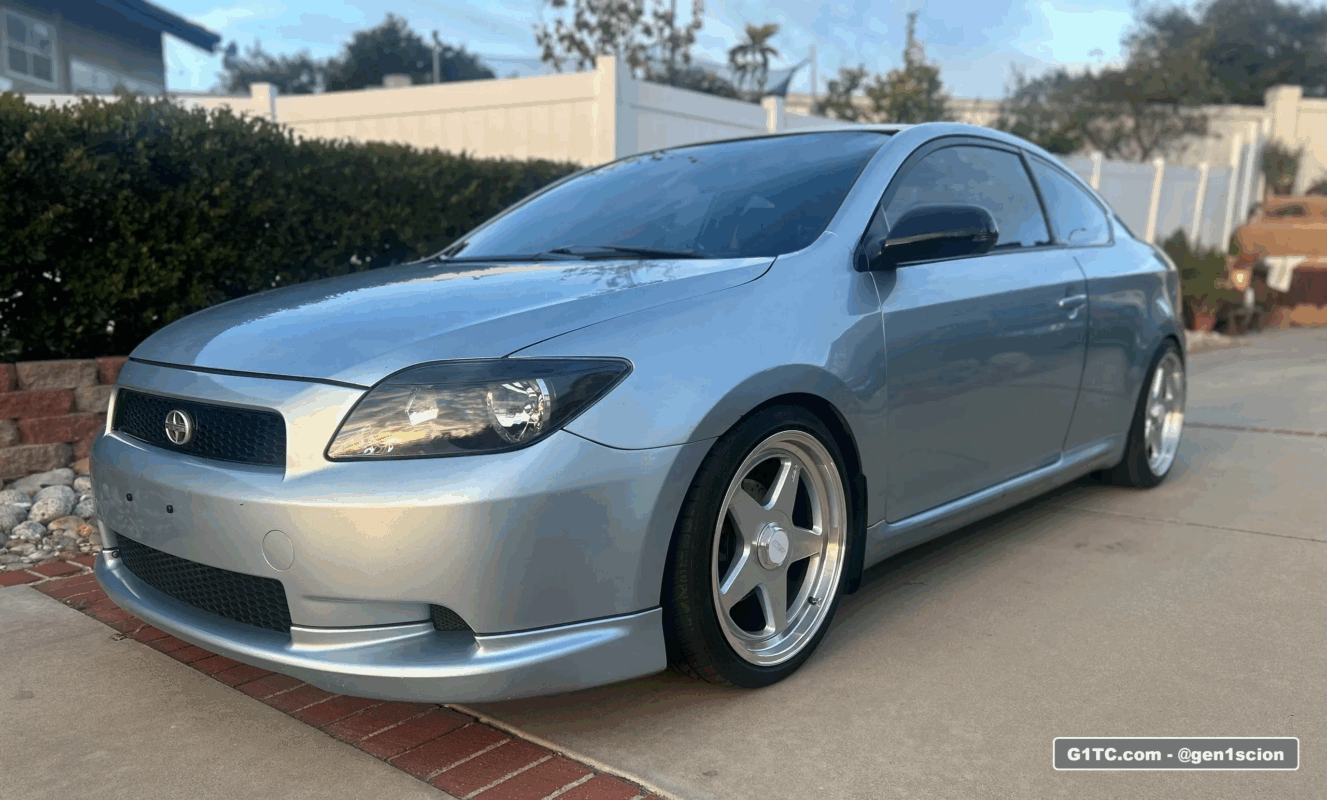
My Experience Lowering the Scion tC
THE PROS
- Better handling overall on smooth roads.
- Better cornering, reduced roll around corners.
- Looks great
THE CONS
- Stiffer ride quality (bumpy), especially the Racelands. BC Racing coilovers were better with adjustable dampening, but still stiff. I upgraded to Swift Springs and they are marginally softer. This is even more amplified with thinner tires, I’m running Fullway HP108 225/40/18. Less noticeable when I had a 225/45/17 stock setup.
- Really bad wheel hop. Especially noticable when hitting a bump on a turn.
- Really bad bump steer, usually a result of hitting a bump on a turn.
- Uneven tire wear, eventually. The more camber, the worse inside tire wear. Bad tires will eventually cause other issues with handling and road noise.
- Potential CV Axle issues if you go too low. I haven’t had any issues but I’ve seen guys cambered out as low as they can get it go through several axles a year which is NOT my cup of tea. Not worth the hassle.
