
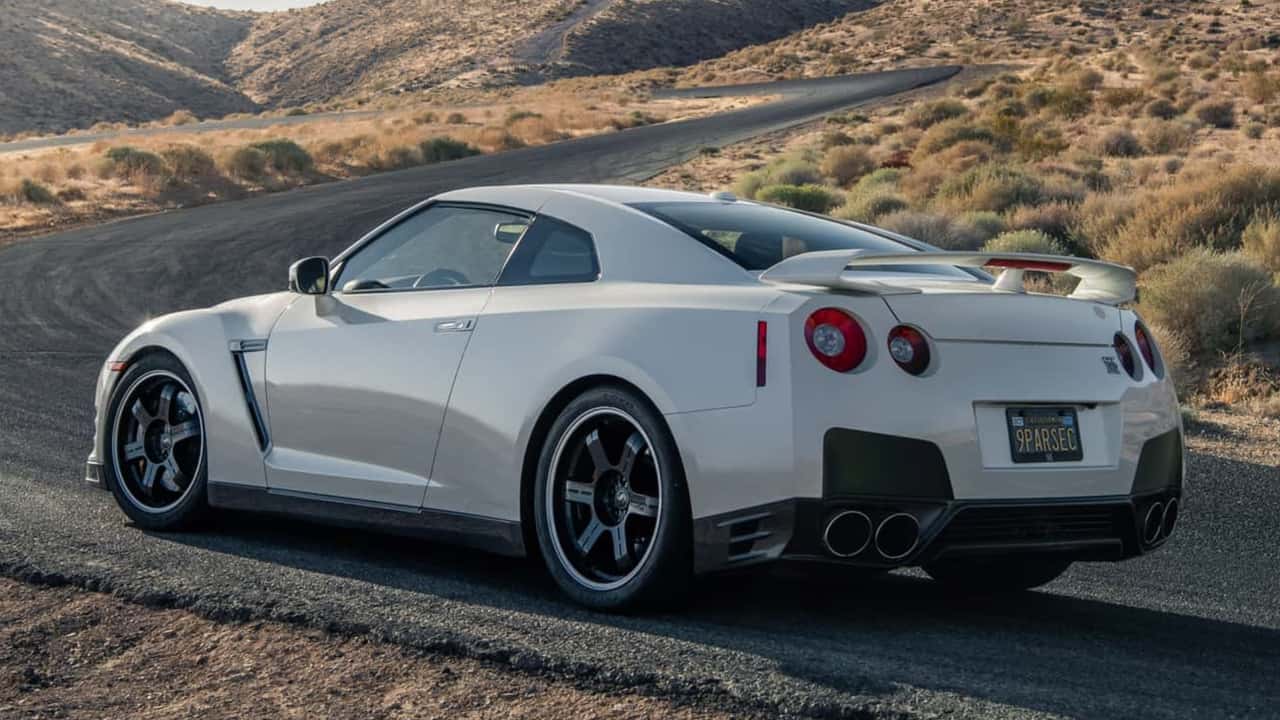
Nissan confirmed to Motor1 that the R36 GT-R won’t be fully electric.
It’s been a big week for fans of the Nissan GT-R. During our visit to the company’s headquarters in Yokohama, Japan, we learned a lot about the next “Godzilla.” CEO Ivan Espinosa confirmed that the R36 is already in development and hinted that even more sports cars could follow in the future.
After speaking with Espinosa, we also sat down with Richard Candler, Nissan’s global head of product strategy and the key figure behind the planning of the next-generation R36 GT-R. He provided even more insight into what’s coming—and it should be welcome news for enthusiasts.
Most importantly, Candler confirmed that the R36 GT-R won’t be electric. He explained:
‘I think what we’ve seen so far is that electric sports cars haven’t been hugely popular. I think they’ll come as better battery technology takes its next leap, but the current lithium chemistries are not capable of producing a GT-R-type product. We’re not going to go with batteries in the next generation. No way.’
The biggest twist in the future of the Nissan GT-R R36 is now official: there will be no fully electric “Godzilla.” After years of speculation that Nissan would push its legendary performance icon into a battery-only future, new confirmations from the company have completely reshaped expectations.
Instead of going all-in on EV technology, Nissan is now moving toward a hybrid performance platform, most likely pairing a twin-turbocharged V6 engine with electric motor assistance. This approach keeps the GT-R’s core identity intact—raw combustion power, high-speed endurance, and track-focused engineering—while still meeting tightening global emissions regulations.
For enthusiasts, this is a major win. The fear was that the GT-R badge would be attached to a silent, fully electric supercar that might deliver speed but lose the emotional character that made the R32, R34, and R35 iconic. Nissan’s latest direction suggests the company understands something critical: a GT-R isn’t just about numbers—it’s about feel.
Reports from within Nissan indicate the R36 is already deep in development, and the plan is to deliver something entirely new rather than evolve the aging R35 platform. Engineers are targeting a completely reworked chassis, improved weight distribution, and a powertrain that could push well beyond 700 horsepower in hybrid form.
What makes this even more interesting is the reasoning behind dropping a full EV GT-R. Nissan executives have pointed to current battery limitations, especially around sustained track performance. High-performance driving drains batteries quickly, and repeated hot laps create thermal challenges that even advanced EV systems struggle to manage. In simple terms: today’s EV tech can deliver speed, but not endurance—something the GT-R has always been famous for.
That distinction matters more than ever in the modern performance car world. Competitors like the Porsche 911 Turbo and hybrid supercars from Ferrari and McLaren are redefining what performance means, but the GT-R has always carved its own identity as a “supercar killer” that thrives in real-world conditions, not just spec sheets.
This shift to hybrid also opens the door to something enthusiasts have been speculating about for years: a potential connection between Nissan’s performance divisions and future platform sharing. Some reports suggest Nissan could explore shared architecture with future high-performance models in the Renault–Nissan–Mitsubishi alliance, though nothing is confirmed yet.
What is clear is that Nissan is treating the R36 GT-R as more than just a new model—it’s a halo car project meant to redefine the brand’s performance identity for the next decade. With the R35 officially ending production after an 18-year run, expectations are extremely high for its successor to justify the GT-R legacy.
And that’s where the hype is building fast online. Enthusiast communities are already debating what this hybrid direction means for the future value of the R35, whether the R36 will still feel like a “true GT-R,” and how far Nissan can push performance without fully abandoning internal combustion.
One thing is certain: the era of electric-only hypercars may be expanding across the industry, but the GT-R is refusing to follow the same path. Instead, Nissan is betting on a middle ground—electrified performance without sacrificing the mechanical soul of Godzilla.
For fans, that might be the most important news yet: the GT-R isn’t going quiet. It’s evolving—but still fighting.
This post was originally published on this site.
