
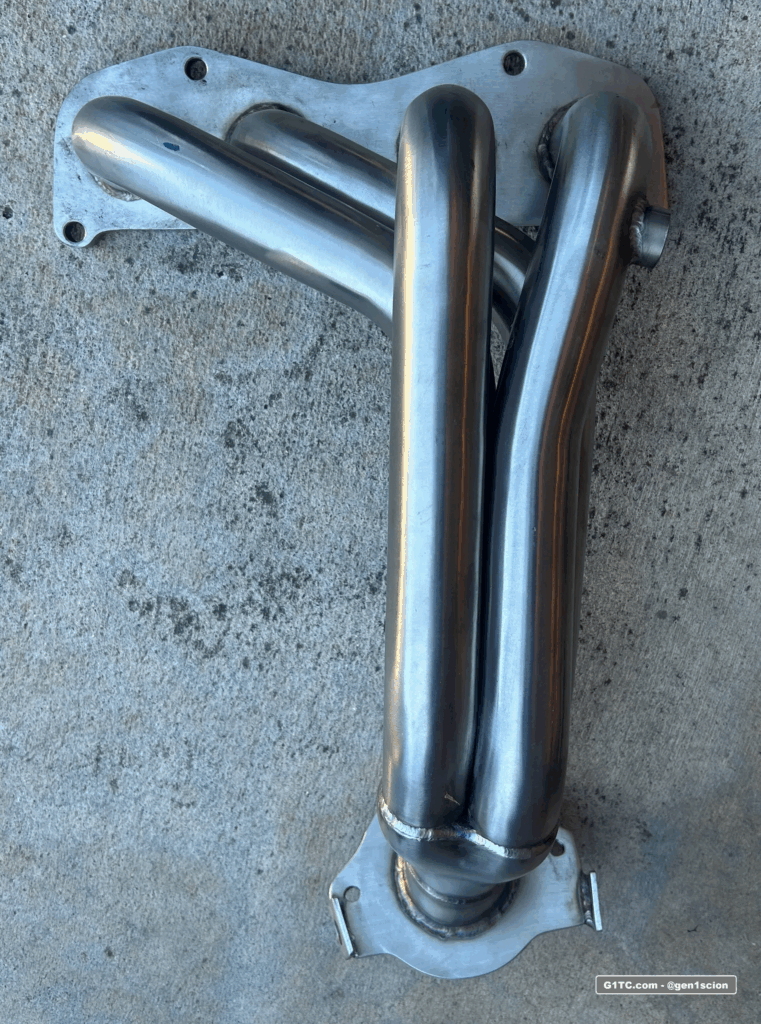
- Alphawerks 4-1 race header, (design later bought by DME)
- DC Sports 4-2-1 Ceramic Race Header, One Piece, p/n: SHR4402
- Dezod Motorsports Green (catted) 4-1 Header-tC 05-10
- Dezod Motorsports Red Catless Race 4-1 Header-tC 05-10
- DME 4-1 Race Header, p/n 14-3051
- Magnaflow 452487 | SCION TC 2005-up to April 2006, CA Legal | EO# D-193-124
- Megan Race Header 4-1 T304 for Scion TC 2AZ-FE 05-10 p/n MR-SSH-STC05
- OBX Performance Headers, p/n 10-2603-1
- Strup Stainless Steel Race Header (4-1), Ceramic Coated, p/n: TC41102
- Tsudo 04-10 Scion tC 4-2-1 Race Header w/ S-pipe, p/n 01-0507
- Weapon R Stainless Steel Race Headers 4-2-1, p/n: 953-116-104
DME Headers
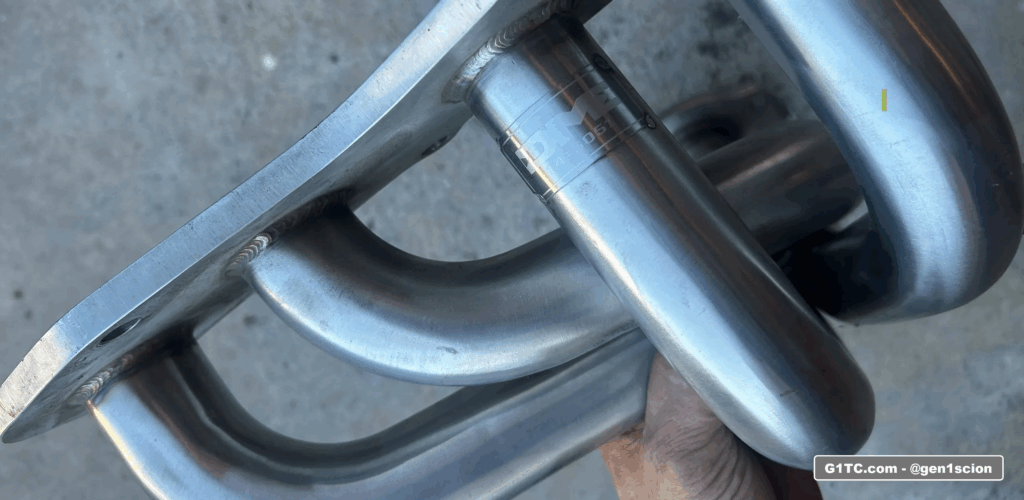
Installation Tips
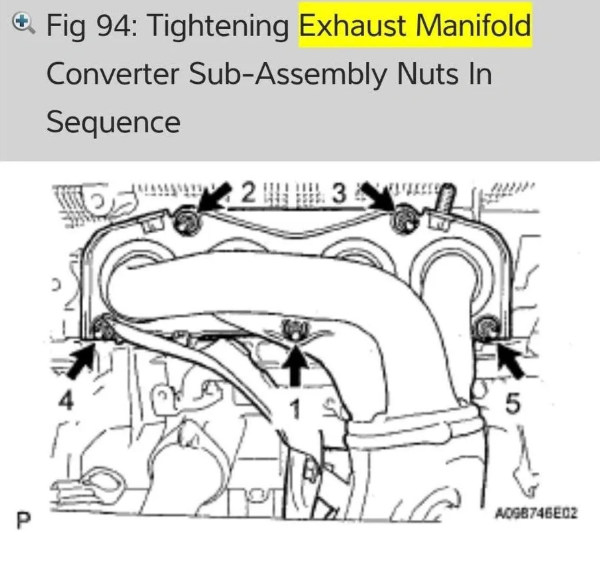
Exhaust manifold gasket
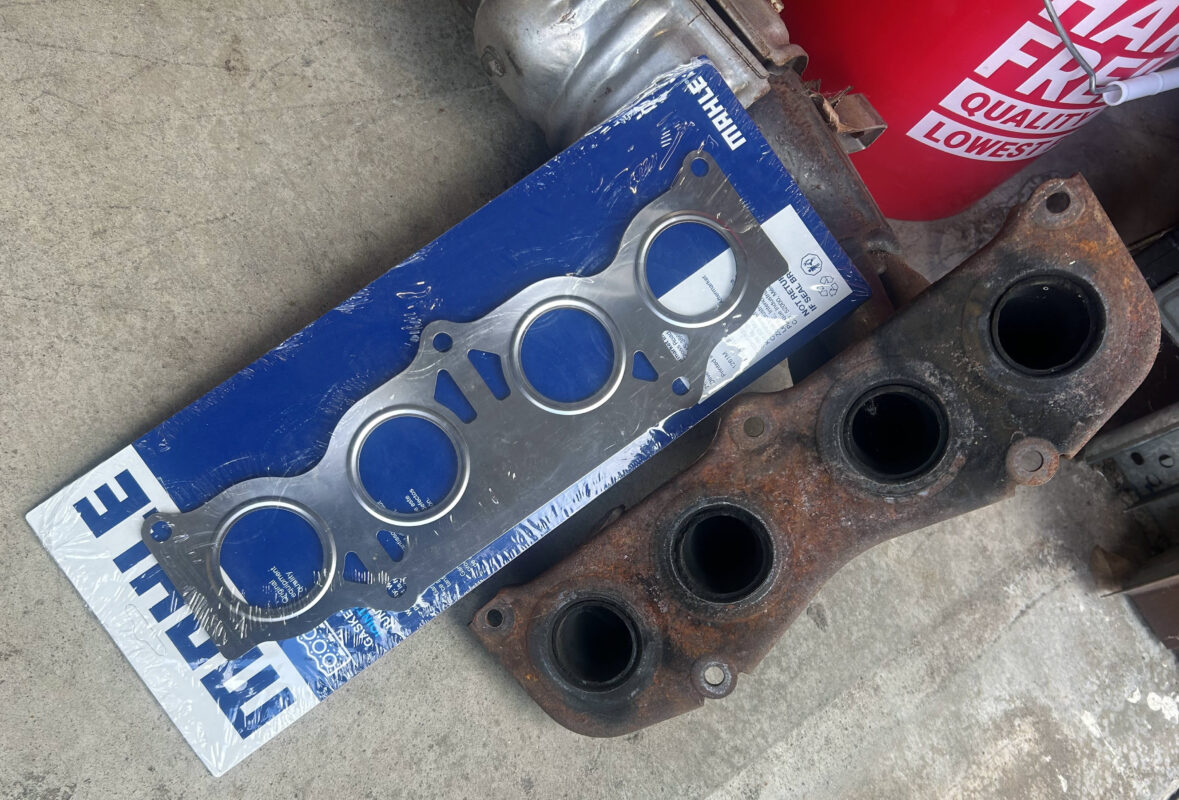
Replace the bottom flange gasket as needed
Flange Gasket @ bottom to S-pipe: MAHLE p/n F31662
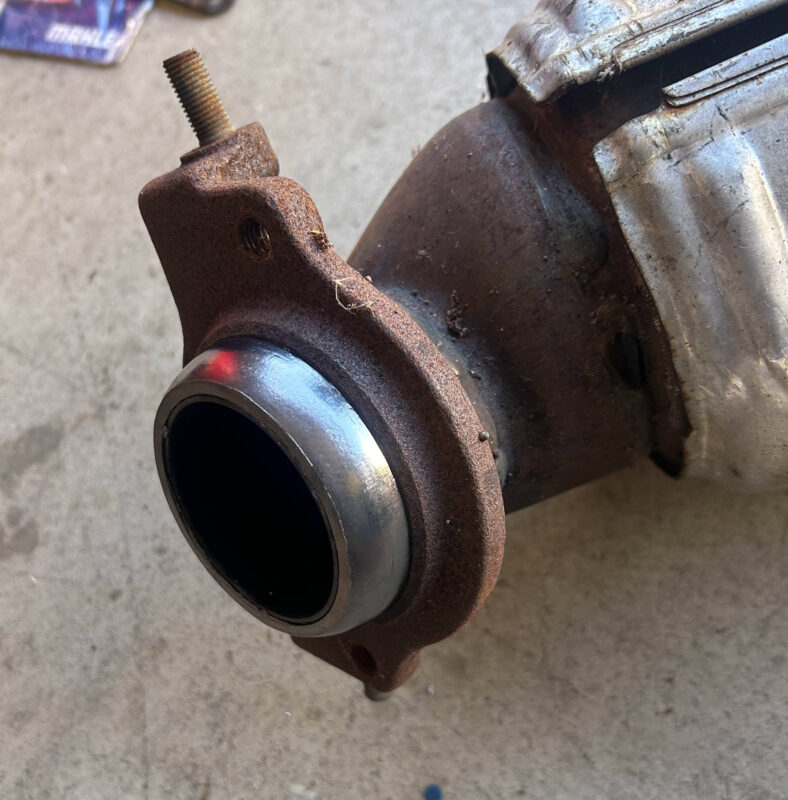
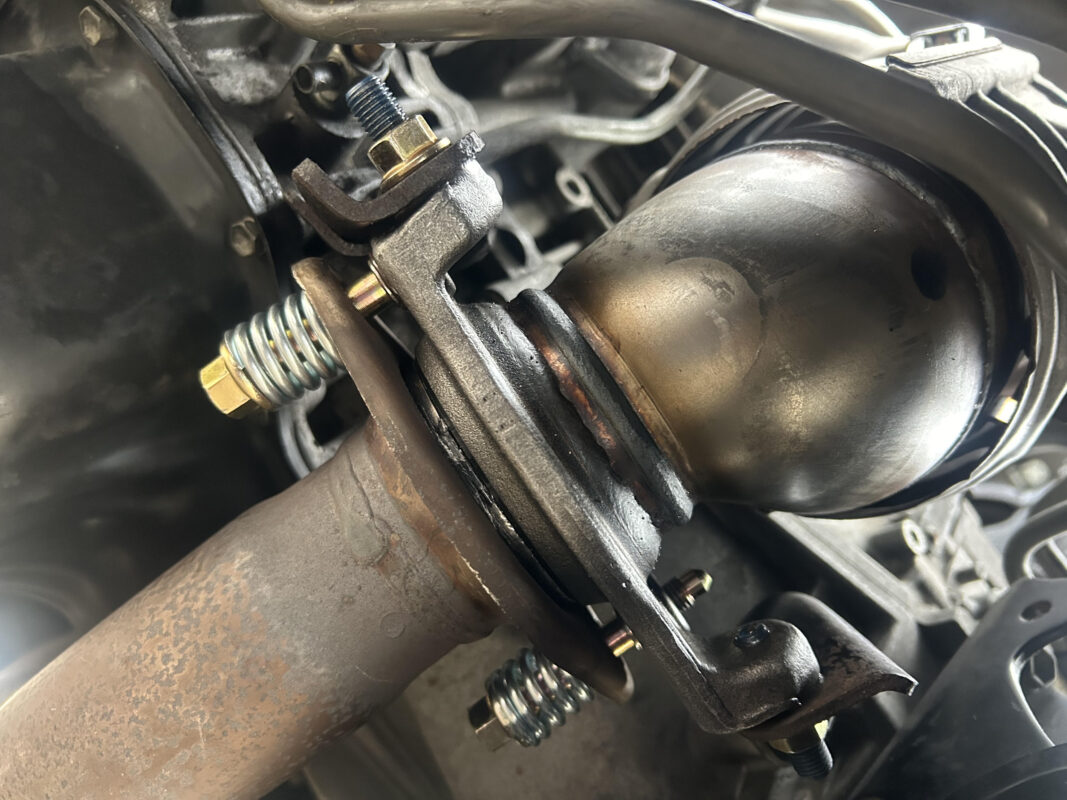
Replace the bottom hardware as needed
P0420 CEL code after installation
You might need a defouler
If you need a defouler, here are some options below. Note, these may not work at all, or you may not pass emissions with these installed.
Make sure to find a defouler that matches the O2 bung thread M18x1.5.
BLOX Racing 02 Diagnostic Plug Stainless Steel
J Style defouler w/ Restrictor Fittings for adjustable flow
Fastline Performance V3 J-Type Spark Plug / Sensor Defouler, 90-degree
Fastline Performance V2 Spark Plug / Sensor Defouler, Straight
Why Headers Don’t Work as Expected on a 2005-2010 Scion tC
Installing aftermarket headers is one of the first modifications many owners consider for the Scion tC, hoping for improved airflow, more power, and better throttle response. On paper, freeing up exhaust restriction should help the 2AZ-FE engine breathe better. In practice, however, many 2005 tC owners find the gains disappointing—and the reason largely comes down to how the factory ECU adapts and relearns.
The 2005 Scion tC uses a closed-loop ECU strategy during most normal driving conditions. This means the ECU constantly monitors oxygen sensor feedback and adjusts fueling to maintain a target air-fuel ratio. When headers are installed, exhaust flow characteristics change. This often alters exhaust gas velocity and O₂ sensor readings, especially at low and mid-range RPM where daily driving occurs.
Initially, the car may feel slightly stronger or more responsive. But over time, the ECU begins to relearn. It compensates for the increased airflow by adjusting fuel trims, effectively pulling the engine back toward its original emissions-focused targets. Long-term fuel trims (LTFT) adapt to the new exhaust setup, and whatever small gains were felt early on often fade after a few drive cycles.
Another issue is that the factory ECU is not tuned to take advantage of improved scavenging from headers. Without changes to ignition timing, cam timing strategy, or open-loop fueling, the engine simply cannot capitalize on the hardware upgrade. In some cases, headers can even trigger check engine lights due to catalyst efficiency codes or altered O₂ sensor behavior, forcing the ECU into further compensations that reduce performance.
The result is that on a stock or lightly modified 2005 Scion tC, headers alone rarely deliver meaningful, repeatable gains. To truly benefit from them, ECU tuning or a piggyback/standalone solution is needed to prevent the ECU from undoing the airflow improvements. Without that, the factory ECU does exactly what it was designed to do—adapt, correct, and bring the engine right back to baseline.
