
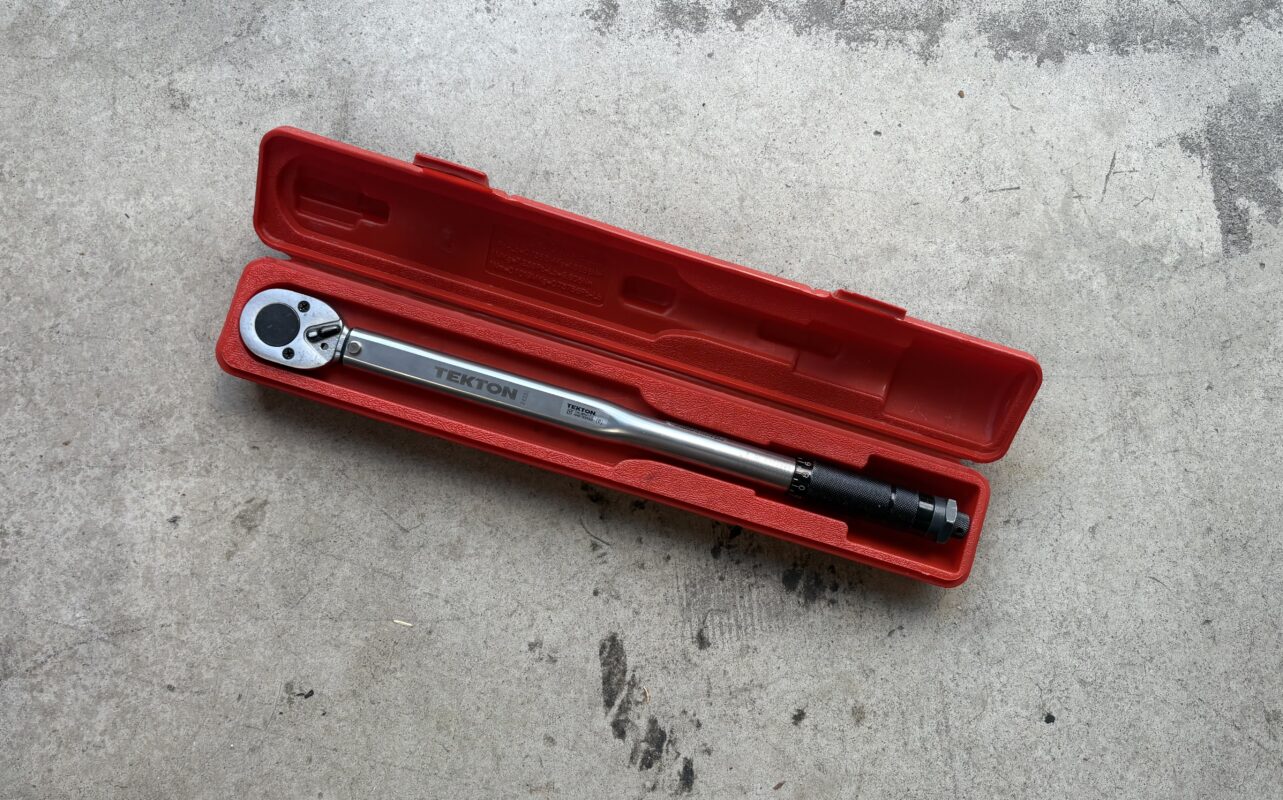
If you’re serious about DIY wrenching, a torque wrench is a must. Over-tightening or under-tightening fasteners can lead to stripped threads, warped parts, or even dangerous failures. The tricky part? Not all torque wrenches work the same. Let’s break down the differences between click, split beam, and digital torque wrenches so you can pick the right one for your garage.
Click here for common torque values for the 2005-2010 Scion tC
Click-Type Torque Wrenches
This is the go-to choice for most DIY mechanics. They’re affordable, accurate enough for nearly all automotive work, and easy to find. As long as you store it properly and don’t ignore calibration, a click wrench gets the job done.
Split Beam Torque Wrenches
Think of this as the “set it and forget it” option. The lack of a spring-loaded mechanism means better long-term accuracy and less maintenance. It costs more upfront, but many consider it a lifetime tool.
Digital Torque Wrenches
Digital wrenches remove guesswork entirely by showing torque values live. They’re excellent for precision work but come at a higher price and require more care. Great tool — just not always necessary for everyday DIY jobs.
| Type | Pros | Cons | Best For |
|---|---|---|---|
|
Click |
• Affordable and widely available • Simple to use • Audible and tactile click when torque is reached • Accurate when calibrated |
• Can lose calibration if stored under tension • Click can be missed in noisy environments • Must be reset after use |
General DIY work, lug nuts, suspension, beginners |
| Split Beam |
• Holds calibration longer • No need to reset after use • Strong audible and visual feedback • More durable internal design |
• More expensive than click-type • Bulkier head and body • Fewer budget-friendly options |
Frequent DIYers, critical fasteners, long-term ownership. Repetitive work (tire shops). |
| Digital |
• Extremely precise readings • Real-time torque display • Multiple alerts (sound, light, vibration) • Easy unit switching |
• Most expensive option • Requires batteries • Electronics vulnerable to drops |
Engine work, aluminum components, modern vehicles |
Which One Should You Choose?
For most DIY mechanics, a quality click-type torque wrench is more than sufficient and offers the best value. If you want long-term accuracy with less maintenance, split beam is a great upgrade. If you crave precision, convenience, and tech—and don’t mind the cost—digital is king.
No matter which style you choose, using any torque wrench correctly beats guessing every time. Proper torque isn’t just about doing the job right—it’s about keeping your car safe and reliable.
Click type Torque Wrenches
Split Beam Torque Wrenches
Digital Torque Wrenches
I use my Torque Wrenches all the time!
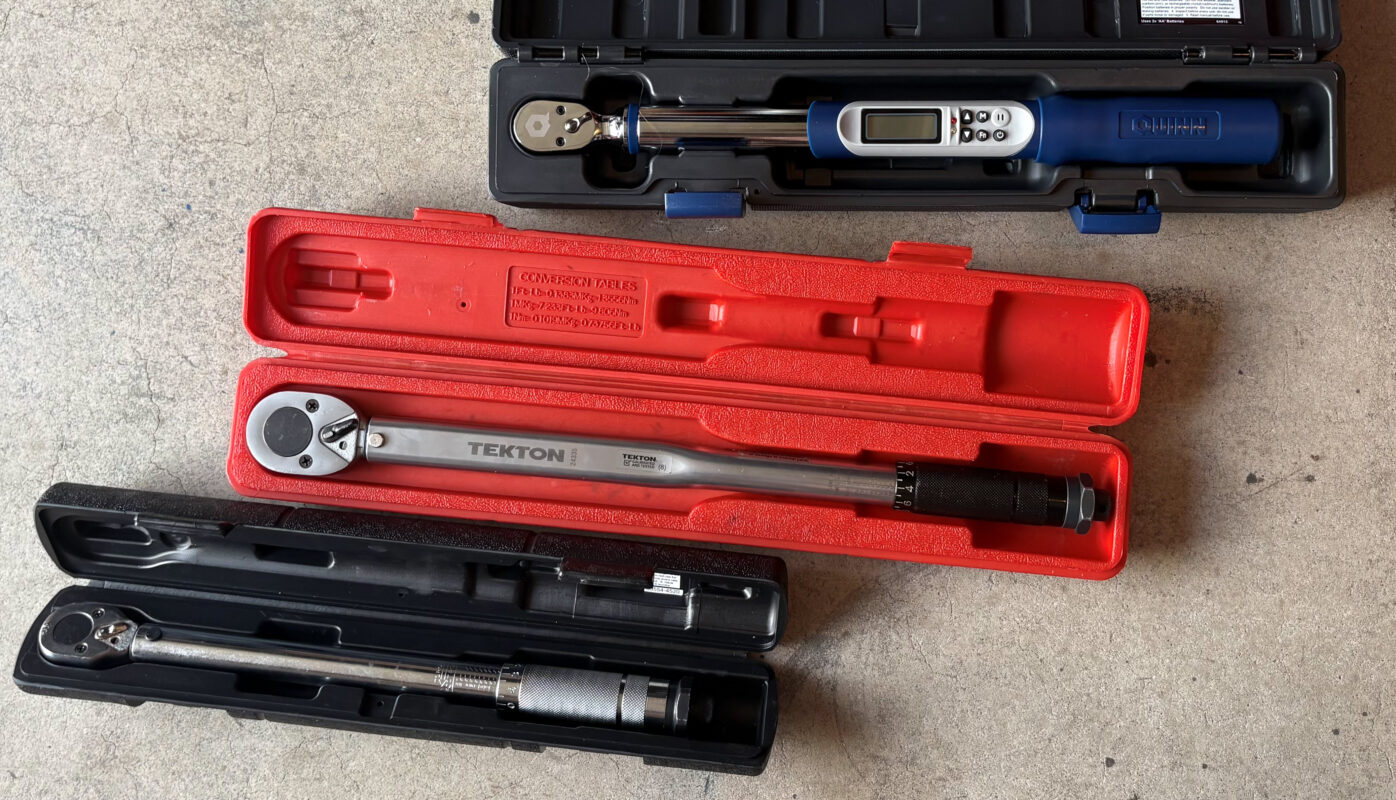
Almost every project or maintenance job I’ve done requires some type of torque wrench. I own a 3/8″ Pittsburg (Harbor Freight) and 1/2″ Tekton click type wrench and a 3/8″ Quinn digital torque wrench for more precise work. Here are few notable projects:
Lug Nut Torque 76ft lbs
Why Torque Specs Exist (And Why You Should Actually Follow Them)
Torque specs exist for a reason. Learn why following torque specifications prevents stripped bolts, broken parts, and costly DIY mistakes.
If you’ve ever tightened a bolt until it “felt right,” you’re not alone. Many DIY mechanics rely on experience, feel, or a quick tug with a ratchet. While that approach might work sometimes, it’s also one of the easiest ways to damage parts without realizing it. Torque specifications are not arbitrary numbers—they are engineered limits designed to keep components secure without causing harm.
Understanding why torque specs exist makes it easier to respect them and build better, longer-lasting repairs.
What a Torque Spec Actually Represents
A torque specification defines how much rotational force should be applied to a fastener. That number is carefully calculated by engineers based on several factors: bolt size, thread pitch, material strength, and the components being clamped together.
When a bolt is tightened correctly, it stretches slightly and creates clamping force. This clamping force is what holds parts together—not the bolt simply being “tight.” Too little torque means insufficient clamping force. Too much torque overstretches the bolt and weakens it, even if it doesn’t fail immediately.
The Cost of Under-Tightening
Under-torqued fasteners are a common cause of vibrations, leaks, and premature failures. On vehicles, this can show up as loose suspension components, oil seepage, or exhaust leaks that get worse over time.
Fasteners that aren’t tight enough can slowly back out due to heat cycles and vibration. What starts as a small oversight can turn into a major repair if a part shifts, wears unevenly, or comes loose entirely.
The Hidden Damage of Over-Tightening
Over-tightening is often more dangerous than under-tightening because the damage isn’t always obvious. Stripped threads, warped components, and stretched bolts may not fail right away. Instead, they weaken over time and fail when the part is under stress.
Aluminum components are especially vulnerable. Valve covers, oil pans, brake calipers, and engine blocks often use aluminum threads that can strip easily when torque specs are ignored. Once those threads are damaged, repairs become more complicated and expensive.
Why “Good and Tight” Isn’t Reliable
Hand feel varies wildly depending on tool length, grip strength, and angle. A long breaker bar can easily double the applied torque compared to a short ratchet, even if it feels similar in your hands.
Torque specs remove guesswork. They create consistency, whether you’re tightening lug nuts, suspension bolts, or internal engine fasteners. Following the specified torque ensures every fastener is doing its job without being overstressed.
Torque Specs and Modern Vehicles
As vehicles have evolved, tolerances have become tighter and materials lighter. Many modern engines and chassis components rely on precise torque values to function correctly. Some fasteners are even designed as torque-to-yield, meaning they stretch permanently and must be replaced after removal.
Ignoring torque specs on these systems isn’t just risky—it can lead to immediate failure or unsafe conditions.
When a Torque Wrench Matters Most
While not every fastener requires a torque wrench, there are situations where it’s essential. Engine components, brake systems, suspension parts, and wheel lug nuts all rely on correct torque for safety and longevity.
Using a torque wrench doesn’t slow down a repair. In fact, it often speeds things up by eliminating rework, stripped threads, and second-guessing.
Building Better DIY Habits
Following torque specs is part of working smarter, not harder. It’s a habit that separates rushed repairs from professional-quality work. Over time, it builds confidence in your repairs and trust in your tools.
Torque specs exist to protect your parts, your time, and your investment. Respecting them means fewer mistakes, fewer repeat repairs, and better results every time you turn a wrench.
