
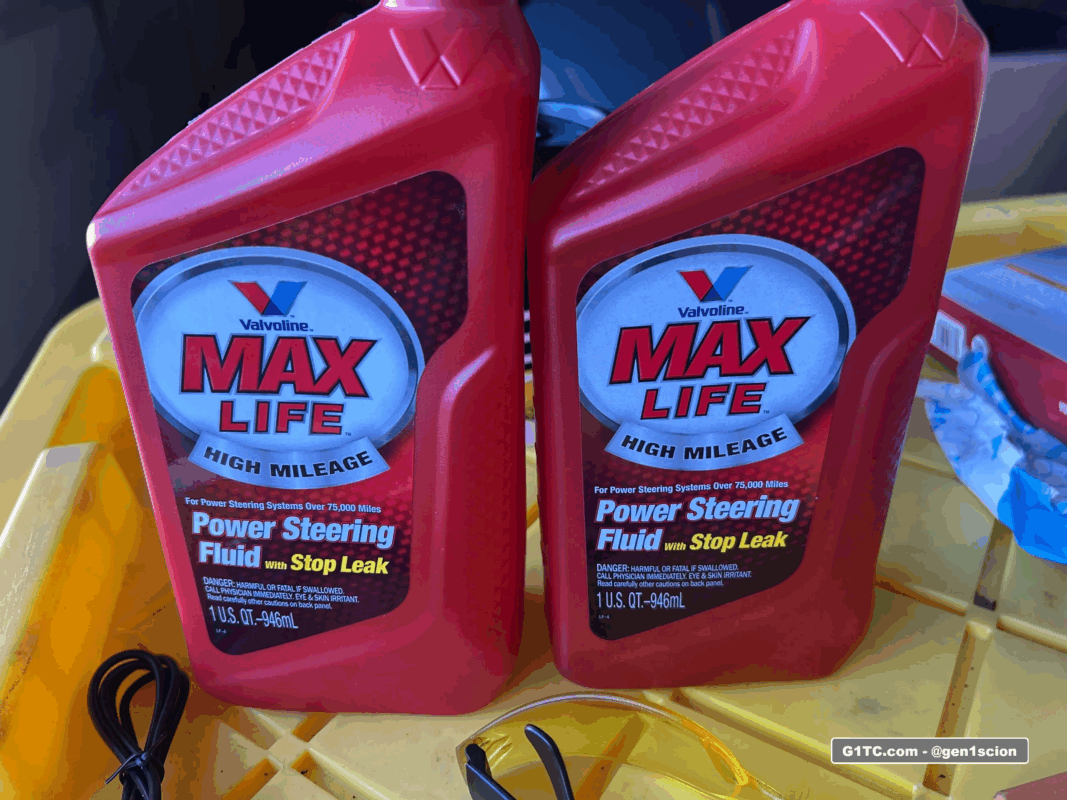
This article describes a basic power steering flush procedure for the 2005-2010 Scion tC. This was my first time flushing the power steering fluid in 239k miles!
In hindsight
If I have to do this again I’m going to buy the cheap Oreilly’s Power Steering fluid (about $5/qt) for the flushing portion of the maintenance. Then once it’s mostly flushed I will start filling with the more expensive Valvoline fluid.
Why is power steering fluid so important?
Your power steering system uses hydraulic pressure to assist you in turning the wheels, making steering effortless. The fluid within this system lubricates components, transfers pressure, and helps dissipate heat. Over time, however, this fluid breaks down.
What happens when power steering fluid isn’t flushed?
-
It accumulates contaminants like tiny metal particles from normal wear and tear, rubber particles from hoses, and moisture. It also degrades due to heat and pressure.
-
Decreased Steering Performance: You might notice your steering feeling stiffer, heavier, or even hear groaning or whining noises, especially when turning the wheel.
-
Increased Wear and Tear: Contaminants in the old fluid act like sandpaper, accelerating wear on critical power steering components like the pump, rack and pinion, and hoses.
-
Leaks: Old, contaminated fluid can also contribute to the deterioration of seals and hoses, potentially leading to leaks in the system.
Other power steering components (not covered in a basic flush)
- Power steering reservoir
- Power steering pump
- Rack and Pinion (remanufactured)
- Power steering hard lines send and return
Instructions
- Chock the wheels and jack up the front of the car about 2 inches off the ground, wheels on.
- Key in the ignition and steering wheel unlocked
- Use a rag under the reservoir to catch the spillage
- Open Power Steering fluid reservoir and siphon out the old liquid. Here I’m using a fluid extraction hand pump
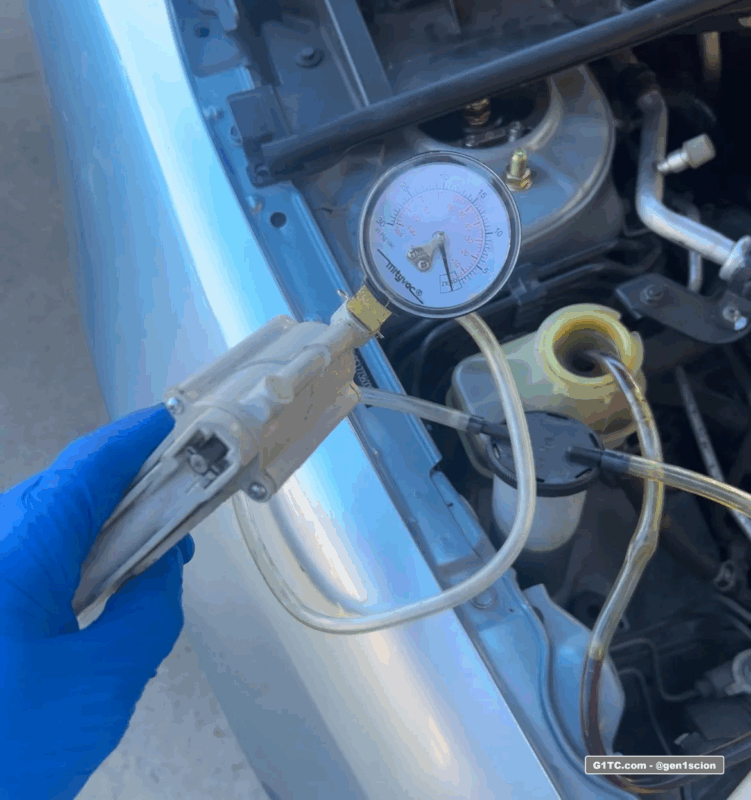
5. 10mm bolt to unbolt the coolant reservoir tank, move it out of the way.
6. Disconnect the bottom (return) line and plug it up. Here I’m just using a cut finger from a plastic glove and electrical tape
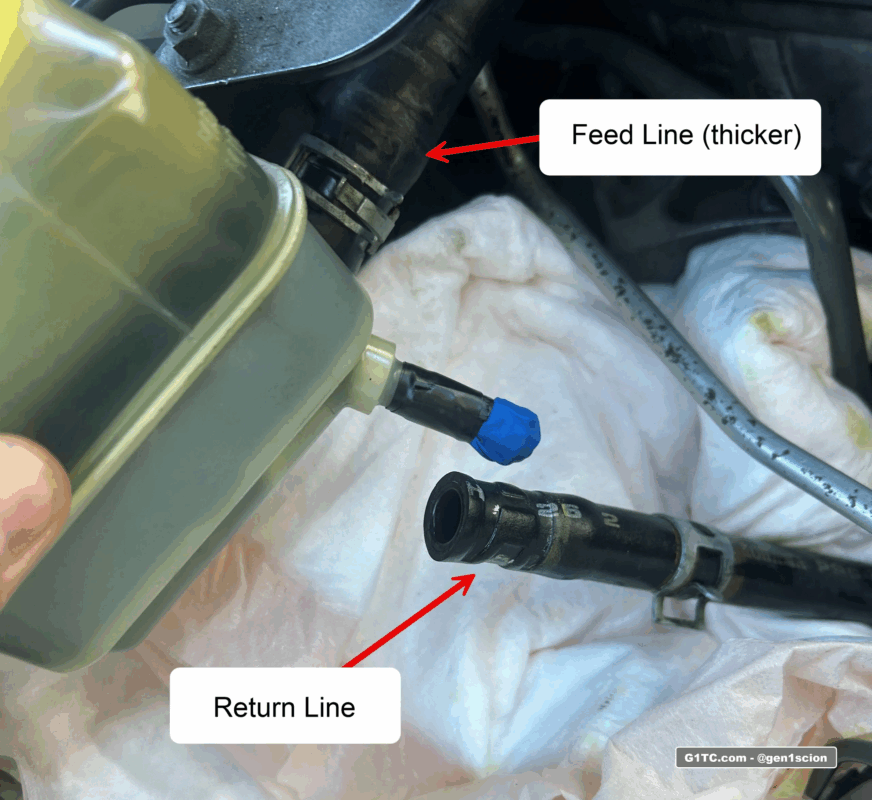
7. If desired, disconnect the feed line (thicker) and then clean out the reservoir tank. Just use soap and water. Rinse and dry it out good before putting back into the car.
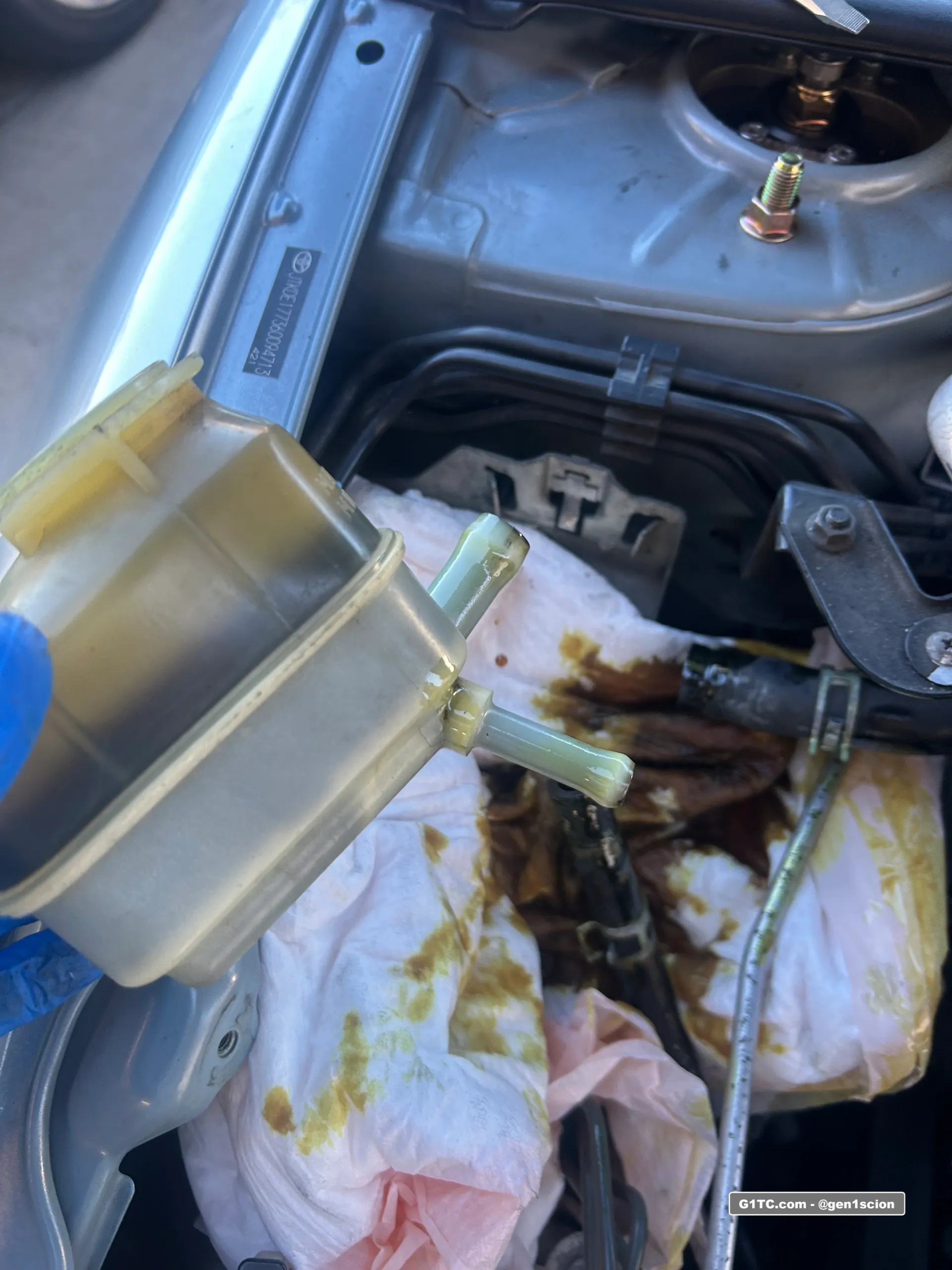
8. With the feed line connected, and the return line running to a separate tank, turn the steering wheel full lock left and right. You’ll see the fluid pour out of the return line, fill the reservoir as you go.
9. After about 1.5 quarts you’ll see the fluid start to change color, this is an indication that the new fluid is making a full pass through your power steering system. You can continue to flush or just consider it done
10. Lower the car back down, start the engine, and then turn the steering wheel left and right full lock again, fill the reservoir again as needed. Close the reservoir when done. Check for leaks. Test drive.
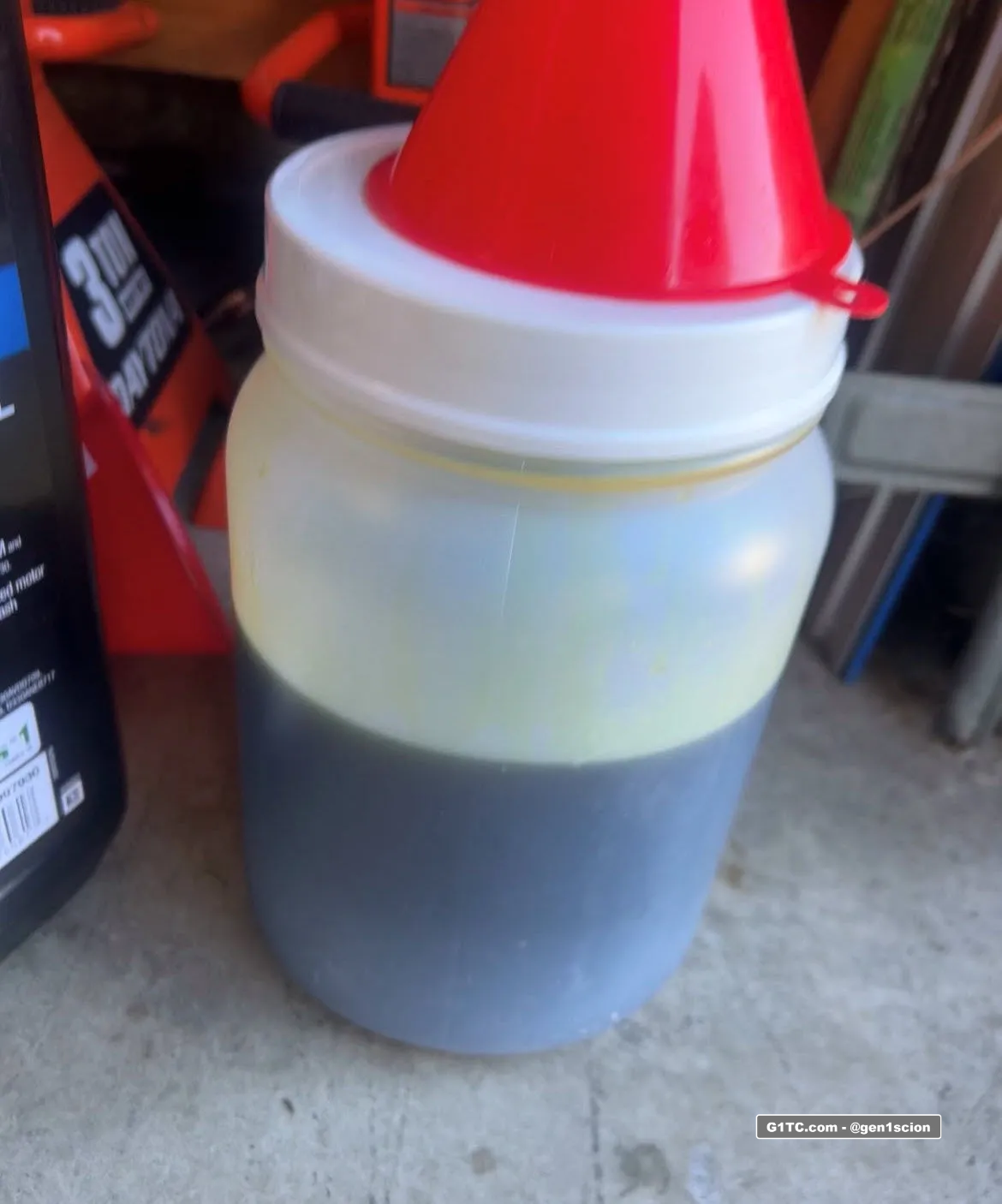
Results
-
Tighter steering and not as loose or sloppy as before
-
Steering feel is much smoother with new power steering fluid
- Less noisy
Summary
-
Flushing and replacing your power steering fluid regularly is crucial for your vehicle’s health and your driving experience.
- Check your power steering fluid regularly and expect to flush it every 60k miles or so.
