
Why a Borescope Camera Belongs in Every DIY Mechanic’s Toolbox
As a DIY mechanic, you spend a lot of time diagnosing problems based on symptoms: noises, warning lights, performance changes, or fault codes. The challenge is that many of the most important components in a vehicle are hidden from direct view. Traditionally, confirming an internal issue meant disassembling parts of the engine or vehicle just to look inside.
A borescope camera solves that problem by letting you visually inspect internal and hard-to-reach areas with minimal disassembly. For beginners and experienced DIYers alike, it’s one of the most practical diagnostic tools you can own.
What Is a Borescope Camera?
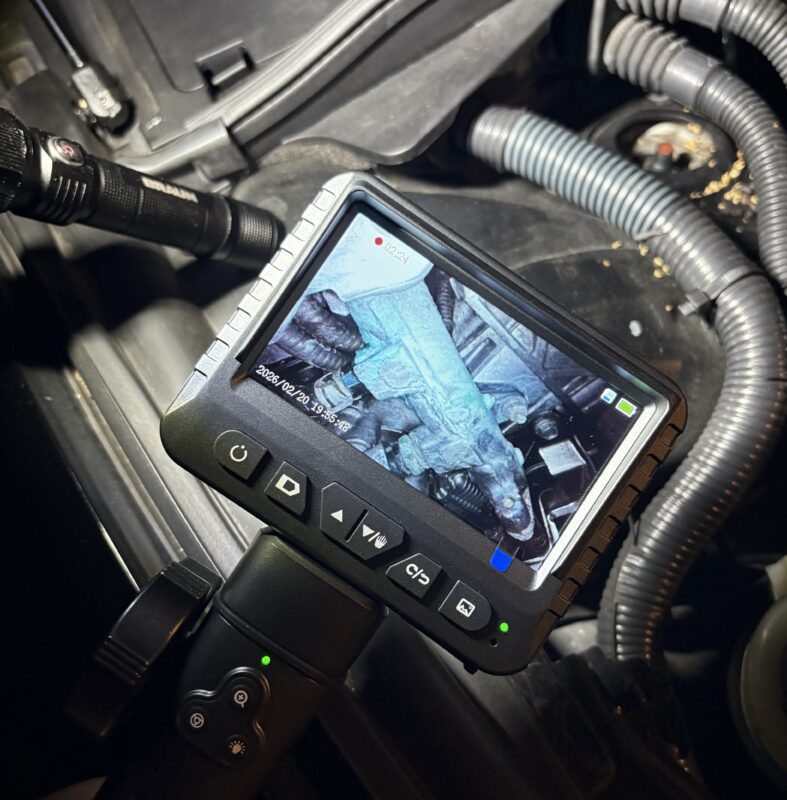
A borescope (sometimes called an inspection camera) is a small camera mounted on the end of a long, thin, flexible cable. The camera has built-in LED lighting and sends live video to a screen or smartphone.
In automotive use, it allows you to inspect certain areas without taking the vehicle apart.
- Engine cylinders
- Combustion chambers
- Intake and exhaust passages
- Inside frame rails or body panels
- Behind dashboards and interior trim
Visual Diagnosis Beats Guesswork
Many DIY repairs start with educated guesses. While experience helps, guessing can still lead to unnecessary work or incorrect repairs.
A borescope lets you:
- Visually confirm carbon buildup on intake valves
- Check cylinder walls for scoring or damage
- Inspect piston tops for cracks or impact marks
- Look for coolant or oil contamination
- Verify whether internal engine damage is present before tearing it down
For beginners, this visual confirmation is huge. It turns abstract problems into clear, visible evidence, making diagnosis easier to understand and explain.
Reduce Unnecessary Disassembly
Disassembly takes time, creates opportunities for mistakes, and often requires replacing gaskets or one-time-use hardware. With a borescope, you can inspect first and decide whether disassembly is actually needed.
This is especially helpful when:
- Diagnosing misfires
- Investigating oil consumption
- Checking for valve or piston damage
- Confirming whether an engine is worth repairing
For someone learning automotive repair, fewer unnecessary tear-downs means fewer chances to get overwhelmed.
Save Money by Avoiding Wrong Repairs
Replacing parts without confirming the root cause is one of the most expensive mistakes DIY mechanics make. A borescope helps prevent that by giving you direct evidence before you buy parts.
For example:
- You can confirm whether cylinder damage exists before rebuilding an engine
- You can check for internal rust before purchasing a used vehicle
- You can inspect components instead of replacing them “just in case”
Even an affordable borescope can pay for itself by preventing a single wrong repair.
Ideal for Modern Engines
Modern vehicles are compact, tightly packaged, and often difficult to access. Engines with turbochargers, direct injection, and complex emissions systems benefit especially from internal inspection.
A borescope is commonly used to:
- Inspect direct-injection intake valves for carbon buildup
- Check turbocharger housings
- Examine EGR passages
- Look inside cooling channels
As vehicles become more complex, diagnostic tools like borescopes become essential—even for home mechanics.
Useful Beyond the Engine Bay
A borescope isn’t limited to engine work. DIY mechanics often use them for:
- Tracing wiring behind dashboards
- Locating dropped bolts or tools
- Inspecting rust inside frames
- Checking exhaust systems for damage
- Diagnosing HVAC blend door issues
It quickly becomes a general-purpose inspection tool you’ll reach for often.
Beginner-Friendly and Affordable
Modern borescopes are designed for non-professionals. Many models:
- Plug directly into a smartphone
- Have built-in screens
- Include adjustable LED lighting
- Offer photo and video recording
You don’t need a professional shop tool to get meaningful results—just a decent camera with good lighting and resolution.
Final Thoughts
For DIY mechanics, especially beginners, a borescope camera bridges the gap between theory and reality. It helps you see what’s actually happening, make informed decisions, and learn faster by connecting symptoms to real-world damage or wear.
If you’re building a serious DIY toolbox, a borescope camera isn’t an advanced luxury tool—it’s a smart, practical investment that makes automotive diagnostics clearer, safer, and more efficient.
Once you start diagnosing with your eyes instead of guesses, you’ll never want to go back.
