
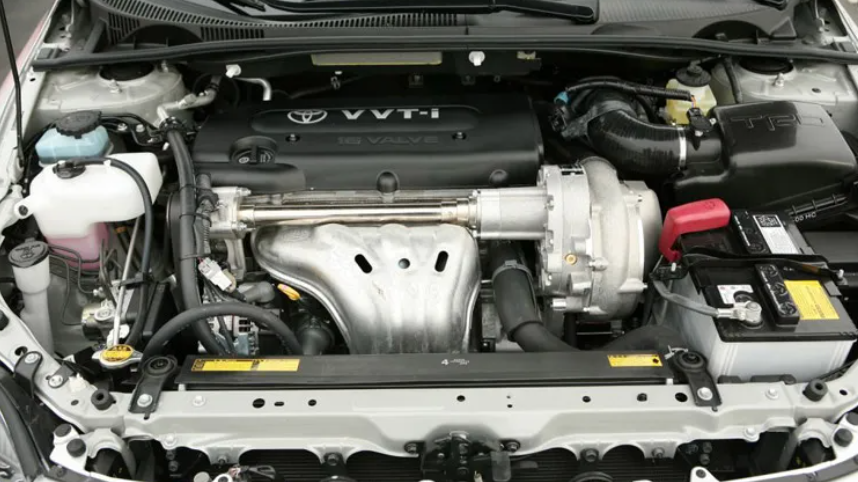
The Supercharged Scion tC: Years Offered, Common Issues, and Real-World Performance
The Scion tC has long been a favorite among Toyota enthusiasts thanks to its sporty styling, practical hatchback layout, and solid aftermarket support. One of the most unique upgrades ever offered for the platform was the factory-backed TRD supercharger kit. Developed by Toyota Racing Development, this setup gave the first-generation tC a meaningful performance boost and transformed how the car drove. However, as desirable as the supercharged tC is, it also comes with a distinct set of reliability considerations—some of which are tied directly to the supercharger itself.
What Years Was the Supercharged Scion tC Offered?
The TRD supercharger kit was officially supported for 2005–2006 Scion tC models, which were equipped with the 2.4-liter 2AZ-FE engine and a cable-operated throttle body. These early model years are critical, as Toyota made significant ECU and throttle changes starting in 2007 that rendered the TRD kit incompatible without extensive custom tuning.
It’s important to clarify that the supercharged tC was never a factory-built trim level. Instead, the supercharger was sold as a dealer-installed or owner-installed accessory, meaning installation quality varied depending on who performed the work. The kit included an Eaton roots-style supercharger, a cast intake manifold, belt-driven pulley system, upgraded fuel injectors, and a piggyback ECU designed to work with the stock engine computer.
Once later model years moved to updated electronics, official TRD support ended, making supercharged tCs relatively rare today.
Performance Gains and Driving Characteristics
In naturally aspirated form, the 2AZ-FE produces approximately 160 horsepower and 162 lb-ft of torque. With the TRD supercharger installed, output climbs to roughly 200 horsepower and nearly 190 lb-ft of torque at the crank. While those numbers aren’t extreme by modern standards, the way the power is delivered completely changes the driving experience.
The roots-style supercharger provides near-instant boost, significantly improving low-end and mid-range torque. Throttle response is sharper, the car feels more responsive in everyday driving, and highway passing requires far less effort. Many owners describe the supercharged tC as feeling “how the car should have come from the factory.”
Real-world performance reflects these gains, with 0–60 mph times dropping into the mid-six-second range and noticeably stronger roll-on acceleration. The supercharged setup favors drivability over top-end speed, making it well suited for street use.
Common Issues With the Supercharged Setup
Despite its factory backing, the TRD supercharger system is not without its flaws. Some issues stem from the engine platform itself, while others are directly related to the supercharger hardware.
Oil consumption remains a well-known issue on early 2AZ-FE engines. While not caused by the supercharger, boost can amplify the consequences of poor oil control if the engine is already worn. Owners must stay vigilant about oil level checks and maintenance.
Heat management is another concern. Intake air temperatures can rise quickly under sustained boost. Heat soak can reduce power and increase knock sensitivity, especially in warmer climates or during aggressive driving.
Clutch wear is also common. The factory clutch struggles to handle the additional torque, particularly on higher-mileage cars. Many supercharged tC owners eventually upgrade to a stronger aftermarket clutch to maintain reliability.
Supercharger Compressor Bearing Issues
One of the most important—and often overlooked—issues specific to the TRD supercharger involves the supercharger compressor bearings. Over time, the bearings inside the Eaton roots-style blower can wear, particularly on higher-mileage or poorly maintained units.
As these bearings degrade, owners may notice:
- High-pitched whining or grinding noises
- Increased supercharger noise that changes with RPM
- Reduced boost efficiency
- Metallic debris in the oiling system of the supercharger
In severe cases, bearing failure can lead to rotor contact or internal damage to the supercharger housing. This is especially concerning because replacement TRD supercharger components are increasingly difficult to source. Unlike modern aftermarket kits, rebuild support for these older TRD units is limited, and complete replacement blowers can be expensive or unavailable.
Regular belt inspections, listening for abnormal noises, and avoiding overspinning the supercharger with smaller pulleys are critical to extending compressor bearing life. Once bearing noise appears, continued operation can rapidly worsen the damage.
Tuning and Long-Term Ownership Considerations
The TRD piggyback ECU works adequately for an otherwise stock configuration, but it offers very limited tuning flexibility. Toyota’s ECU relearn behavior can override adjustments, making custom tuning challenging. Additional modifications—such as headers, exhaust changes, or pulley swaps—often require standalone or advanced piggyback solutions to remain safe.
Long-term ownership also comes with parts availability concerns. Replacement belts, brackets, and especially internal supercharger components are becoming increasingly scarce, which adds risk for owners relying on used or aging kits.
Final Thoughts
The supercharged Scion tC represents a rare chapter in Toyota’s enthusiast history—a conservative platform given a meaningful, factory-backed performance upgrade. When properly maintained, it delivers excellent drivability, instant torque, and a uniquely engaging character.
However, ownership requires awareness. Oil consumption, heat management, tuning limitations, and supercharger compressor bearing wear all reduce the margin for neglect. For enthusiasts willing to maintain the system carefully and respect its mechanical limits, the supercharged tC remains one of the most rewarding and interesting versions of the platform.
Installation
2005-2006 Scion tC Supercharger Installation guide
Supercharger ECU p/n 89661-21391
