
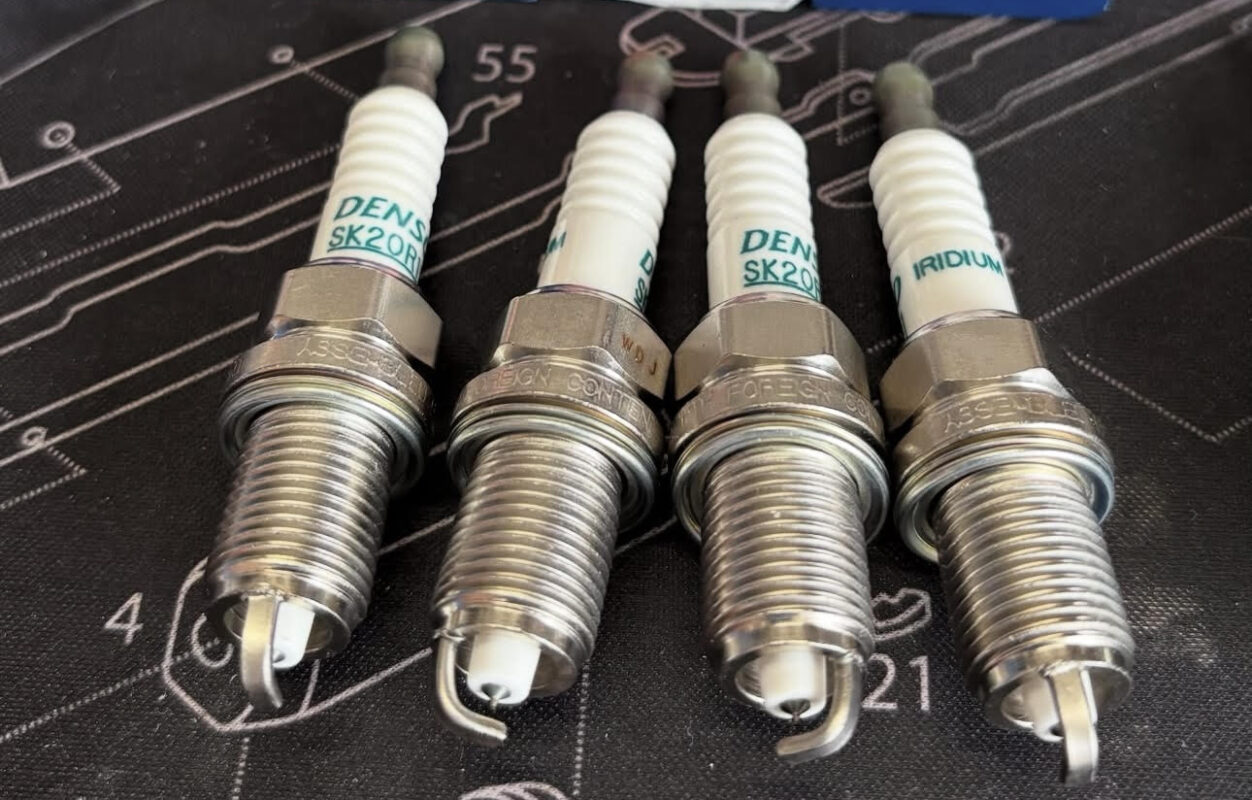
In this article I’ll run you through my spark plug maintenance routine. Always check pre-gapped plugs, buy from a reliable source, and adhere to a step by step installation procedure
Tools that I use for spark plug maintenance
-
Magnetic Spark plug sockets. Scion tC uses 16mm.
-
Spark plug gap measuring tools. I’ve used many over the years, my preference is a feeler gauge.
Repair Manual recommended plugs for Scion tC 2AZ-FE
-
NGK Iridium IFR6A11, obsolete (Replaced by NGK 4589 IFR6T-11)
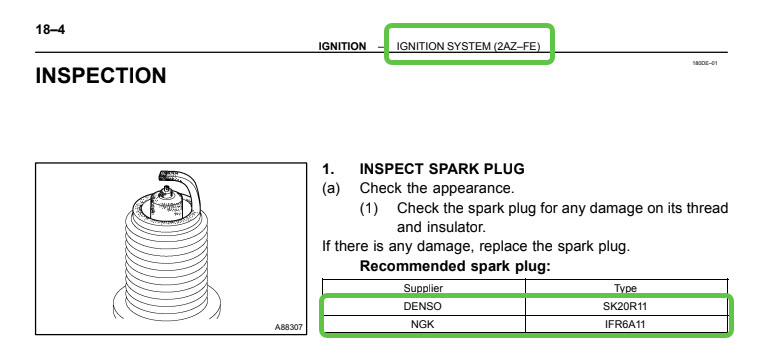
Here are other compatible NGK plus
I would argue that any Iridium based plug will be ok (pre-gapped to spec), but stick to Denso or NGK brands.
Beware of counterfeit spark plugs!
-
Get your spark plugs from a reliable source (Oreilly’s, Autozone, RockAuto, etc). Personally, I don’t mind paying retail at the local parts counter.
-
If you’re buying from Amazon, read the reviews first, and then cross reference to a known good source. Return them if you feel they aren’t Genuine!
-
Be VERY cautious of eBay spark plugs! In fact, I just stay away from eBay for these types of items.
Always measure your “pre-gapped” plugs
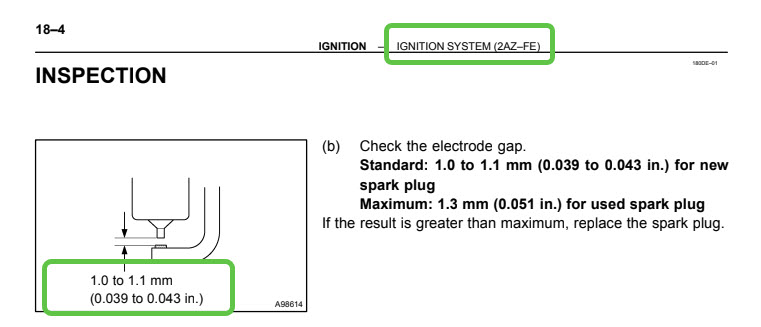
The entire world says replacement plugs are pre-gapped to .044.
I measured 3 different spark plugs from Oreilly’s and they all came in at .041. The Denso 3297 SK20R11 that I got from Amazon also measured .041
According to the repair manual, a new spark plug with gap between .039 and 0.43 is acceptable.
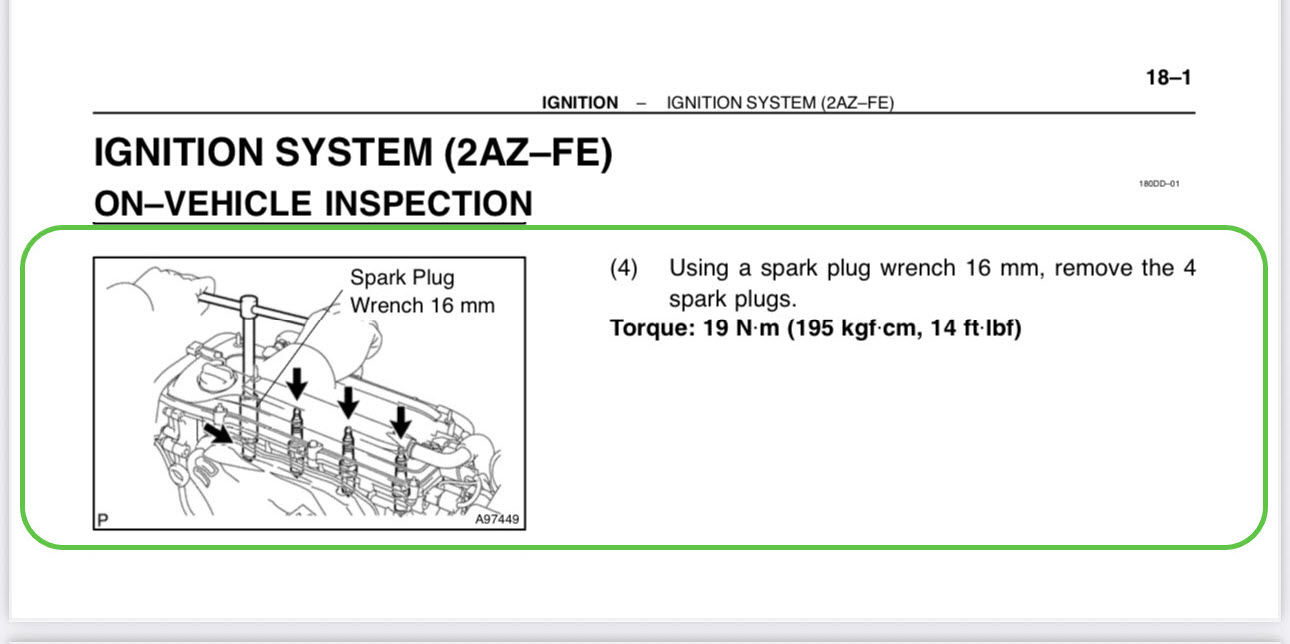
Torque the Spark Plugs down to 14ft / lbf
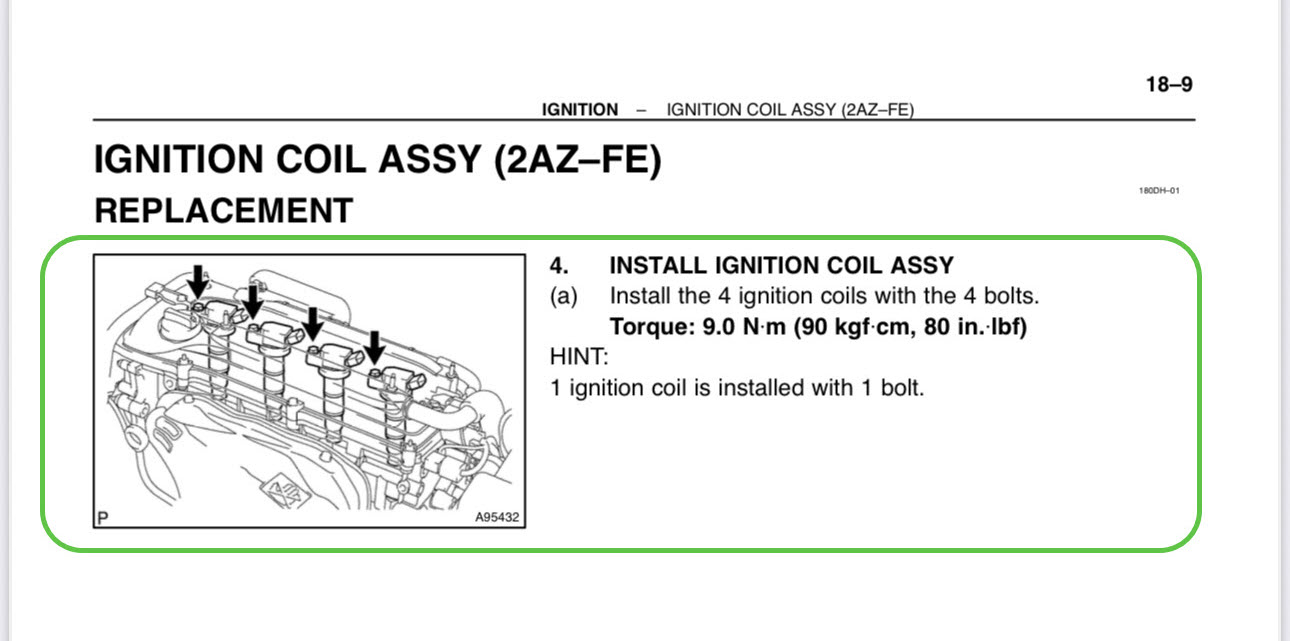
Torque the Ignition Coil Pack bolt down to 80in / lbf
The Heart of the Spark: Understanding Spark Plug Types
When it comes to spark plugs, you’ll primarily encounter three main types in the aftermarket:
-
Copper/Nickel: These are typically the most basic and least expensive. While they offer good conductivity, their softer electrodes wear down faster, requiring more frequent replacement. They are generally not the OEM (Original Equipment Manufacturer) choice for modern engines like the tC’s.
-
Platinum: Platinum plugs offer improved durability over copper thanks to a platinum disc welded to the center electrode. This extends their lifespan significantly and provides a more stable spark. Single platinum plugs have platinum on the center electrode, while double platinum plugs have it on both the center and ground electrodes, further reducing wear.
-
Iridium: Iridium is the top-tier material for spark plugs. It’s incredibly hard and has a very high melting point, allowing for a much finer center electrode. This fine tip concentrates the spark’s energy, leading to superior ignitability, increased fuel efficiency, and exceptional durability. Iridium plugs are typically the most expensive but offer the longest service life.
OEM Recommendations and Why They’re Important
For your 2005-2010 Scion tC, Toyota recommends iridium-tipped spark plugs. Specifically, you’ll often find recommendations for Denso Iridium Long-Life (SK20R11 or equivalent) or NGK Laser Iridium plugs. These are often considered “OE equivalent” and are designed to meet the precise specifications of your engine.
Why stick with iridium, or at least platinum? The 2AZ-FE engine is designed to run optimally with the strong, consistent spark provided by these advanced materials. Using lesser quality plugs can lead to:
-
Reduced Performance: A weaker spark can result in incomplete combustion, leading to less power and poorer acceleration.
-
Decreased Fuel Economy: Inefficient burning of fuel directly translates to more trips to the gas station.
-
Rough Idling and Misfires: Worn or incorrect spark plugs can cause your engine to run unevenly.
-
Increased Emissions: Incomplete combustion can lead to higher levels of harmful pollutants being expelled.
-
Premature Wear: If spark plugs aren’t providing the correct spark, it can put added strain on other ignition components like the ignition coils.
Popular and Recommended Brands
While Denso and NGK are the most common OEM suppliers for Toyota/Scion, other reputable brands also offer excellent options that meet or exceed factory specifications:
-
Denso: As an OEM supplier, Denso spark plugs are a natural fit for your tC. Their Iridium Long-Life series is highly recommended for its durability and performance.
-
NGK: Another prominent OEM supplier, NGK offers various iridium options like the Iridium IX and Laser Iridium series, both well-regarded for their quality and consistent performance.
-
Bosch: Bosch offers reliable platinum and double platinum options that can be suitable alternatives, providing good performance and longevity.
-
Autolite: Autolite also has platinum and double platinum plugs that are often a more budget-friendly choice while still offering good performance.
Replacement Interval and Tips
Generally, iridium spark plugs in your 2005 Scion tC are designed for a long service life, often recommended for replacement every 60,000 to 100,000 miles. However, always consult your vehicle’s owner’s manual for the most accurate and factory-recommended maintenance schedule. Driving conditions (e.g., frequent short trips, heavy loads, aggressive driving) can impact spark plug lifespan, so earlier inspection or replacement might be beneficial.
When replacing your spark plugs:
-
Ensure Proper Gapping: While many iridium plugs come pre-gapped, it’s always wise to double-check the gap with a feeler gauge against your tC’s specifications to ensure optimal performance.
-
Use Anti-Seize: Apply a thin layer of anti-seize compound to the spark plug threads to prevent them from seizing in the cylinder head over time, making future replacements much easier.
-
Torque Correctly: Use a torque wrench to tighten the spark plugs to the manufacturer’s specified torque. Overtightening can damage the threads or the spark plug itself, while undertightening can lead to blow-by and misfires.
Investing in quality spark plugs for your 2005-2010 first gen Scion tC isn’t just about maintenance; it’s about preserving your engine’s efficiency, power, and overall lifespan. By choosing the right type and adhering to recommended replacement intervals, you’ll ensure your tC continues to deliver that smooth, reliable performance you’ve come to expect.
