Quantum VVTI solenoid installation 2005-2010 Scion TC: Get better gas mileage on long drives

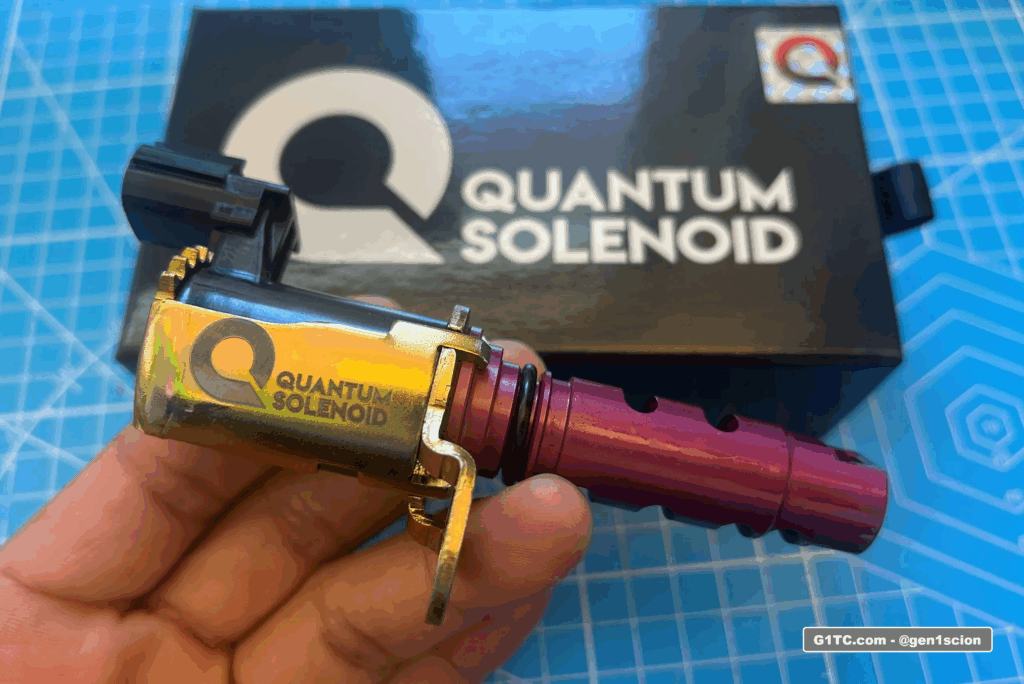
Quantum solenoid for 2005-2010 Scion tC
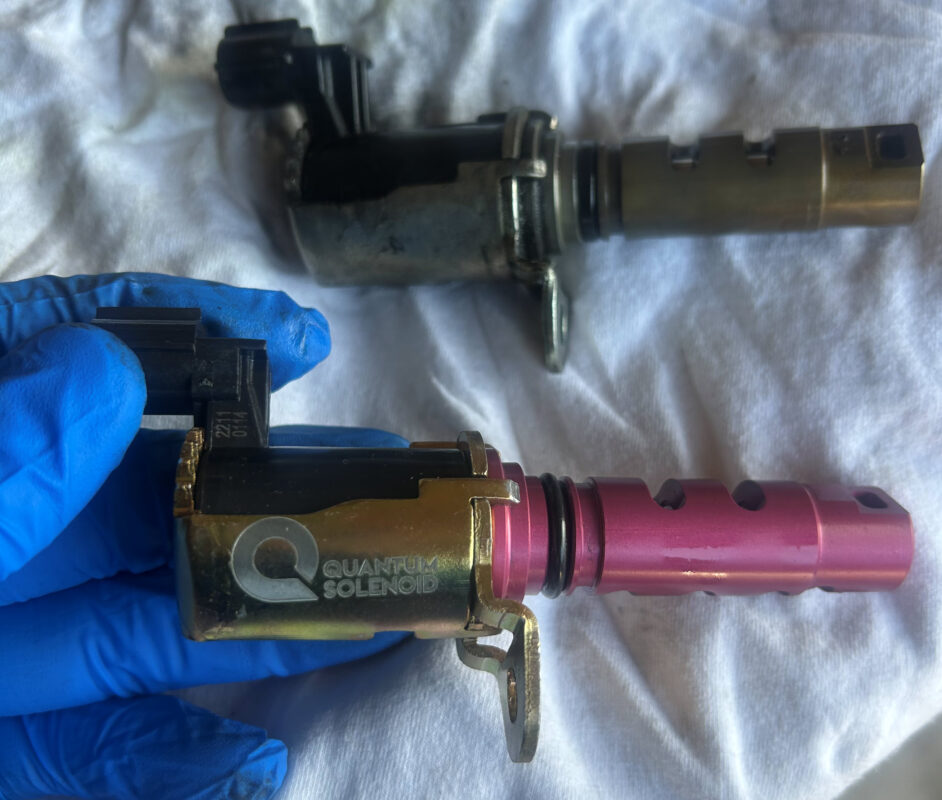
In this article I talk about a little known upgrade to the 2AZ-FE, a performance VVTI solenoid made by Quantum Solenoid.  At the time of writing this article my original OEM solenoid has 239k miles on it and has never been replaced.  I am installing the Quantum Solenoid with consideration as a regular maintenance item.
 
To be clear, I’m replacing the stock VVTI solenoid with the Quantum for the benefit of better gas mileage. I will NOT be measuring HP gains.
 

References
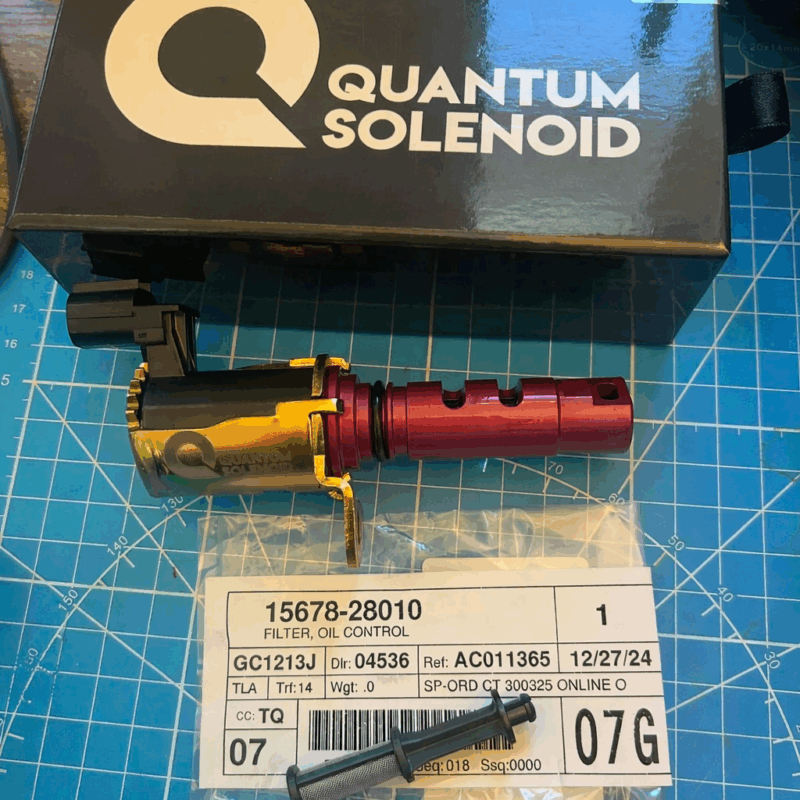

 
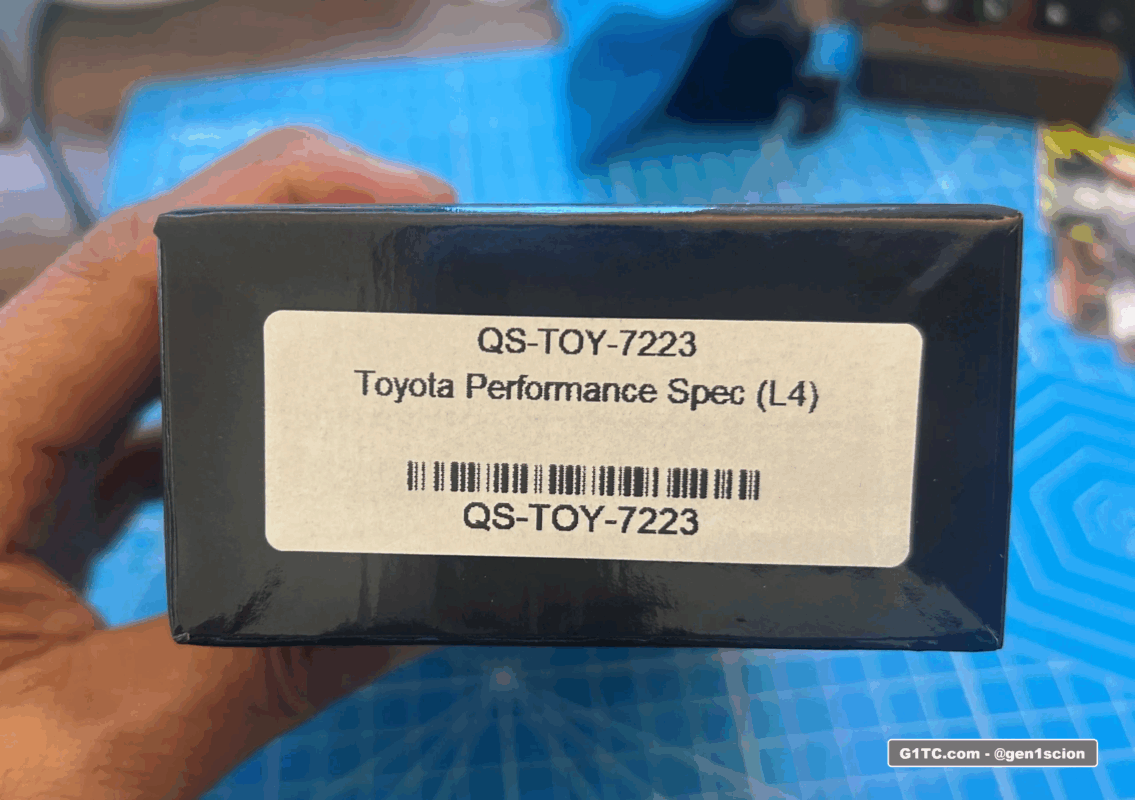
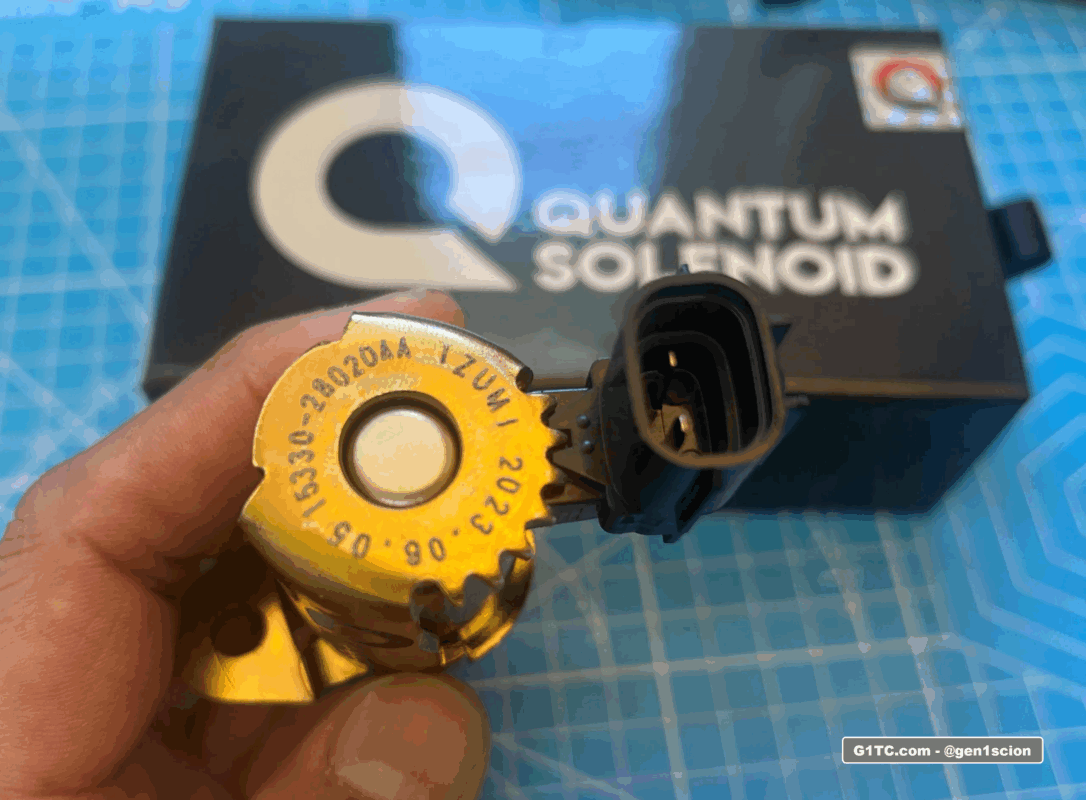
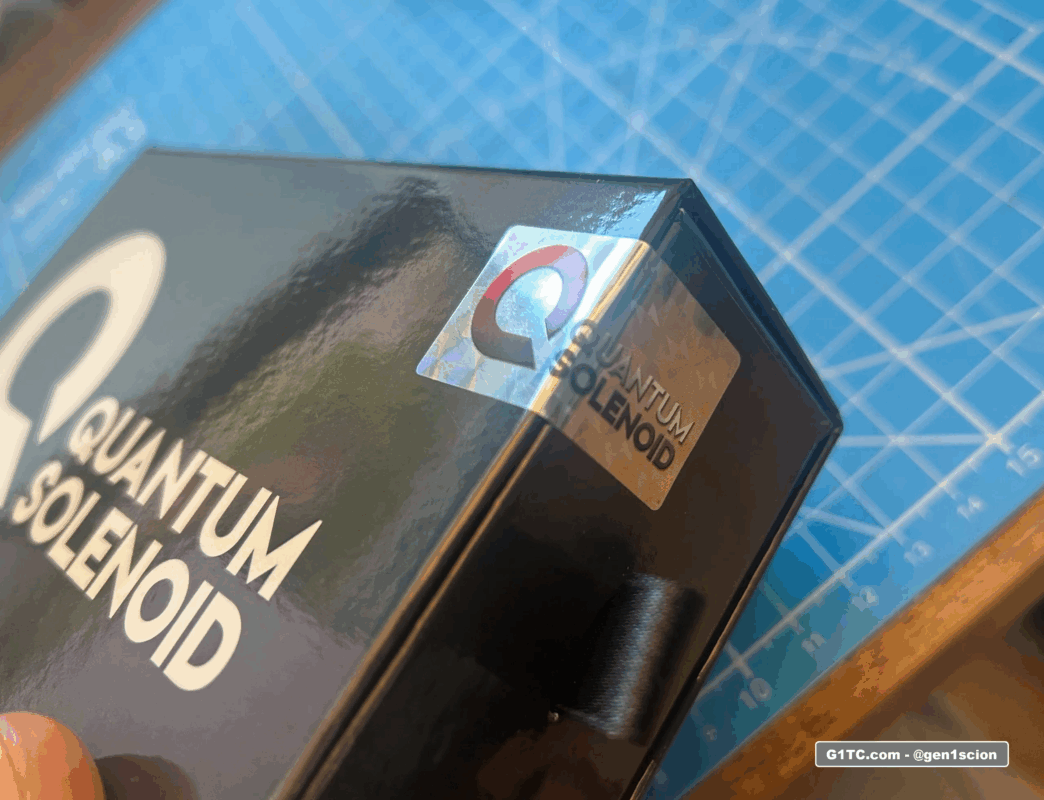
quantum solenoid and vvti filter
qs-toy-7223-quantum-solenoid-vvt-control-valve-scion-tc-2005-2010

Quantum solenoid for TC1 only needs 1 for the install

quantum vvt solenoid for scion tc first gen

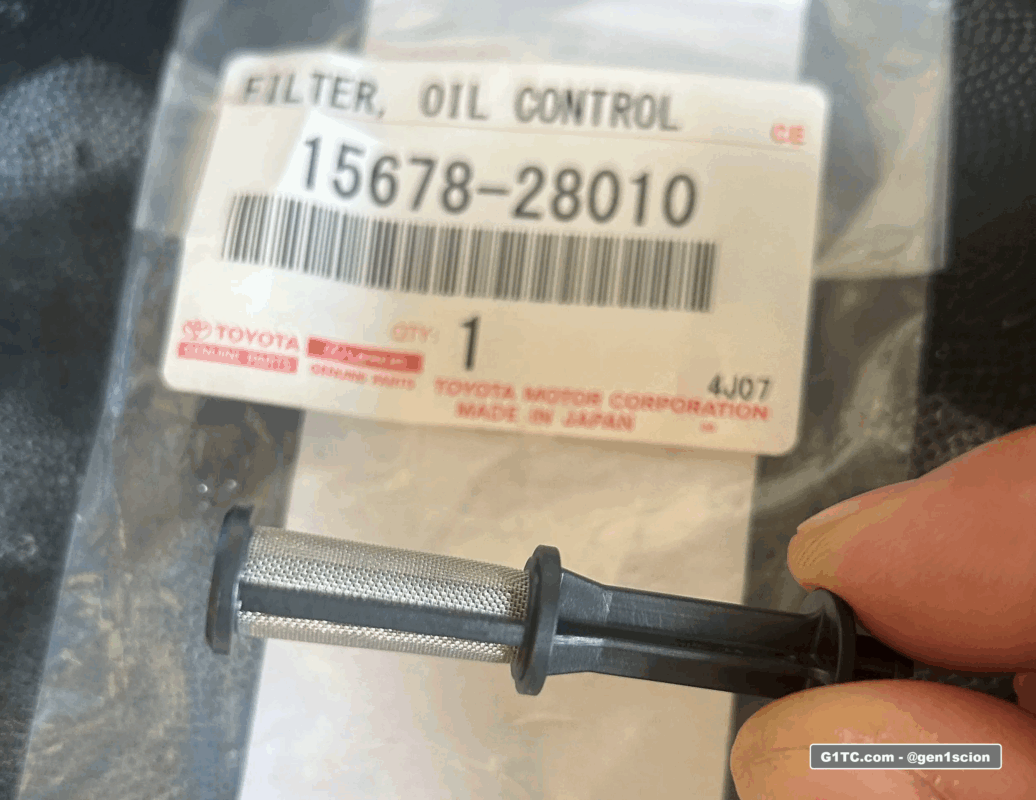
OEM Toyota P/N 15678-28010 Oil Control valve filter

oil control valve VVTI filter OEM Toyota 15678-28010


From the manufacturer

Quantum Solenoid for Scion tC

  • Tested in US and Japan Spec Vehicle
  • Better Throttle Response
  • Faster Engine Revs
  • Smoother Transmission Shifts (Automatic)
  • Safe and Reliable Performance Gains
  • Made Using Only the Best Components, Manufacturing, and Technology
  • Enhanced Torque Output Throughout Wide Engine Speeds
  • PLUG AND PLAY
  • Works Seamlessly with ECM – No tune or other mods needed
  • Patented Design (Taiwan)
  • 1 year warranty

Installation

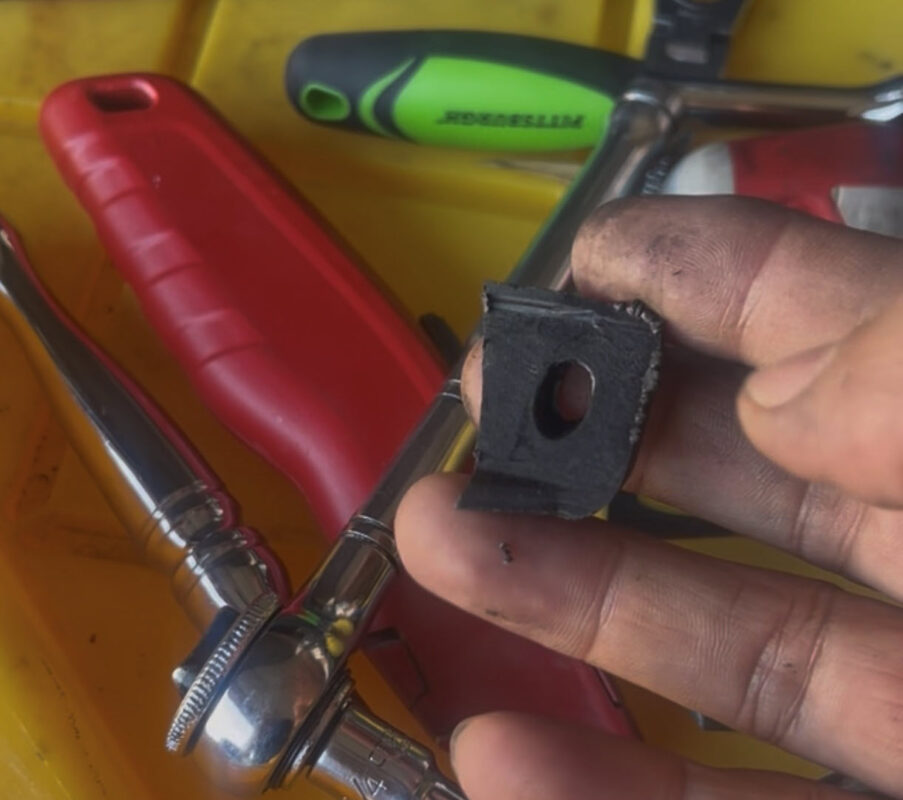
The space back there is TIGHT. I disconnected the PCV valve hose for more room.  I cut off a plastic tab by hand using a sawzall blade on the intake manifold to make room for my hand to even get back there.
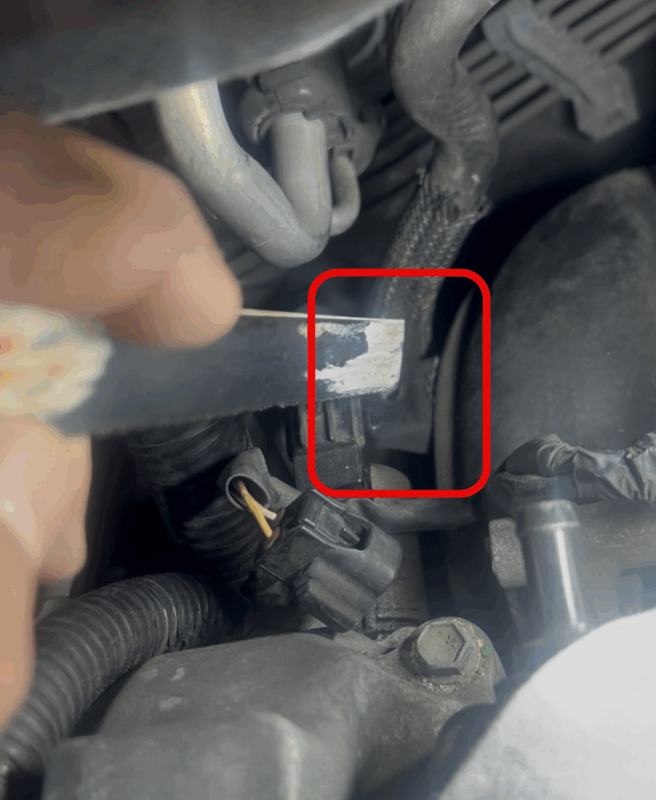
 
cut plastic tab off intake manifold to make clearance using a saw blade by hand

cut plastic tab off intake manifold to make clearance vvti solenoid install
  
Removing the single 10mm bolt was easy, but to re-install I used tape to hold the 10mm bolt in the socket while tightening it.
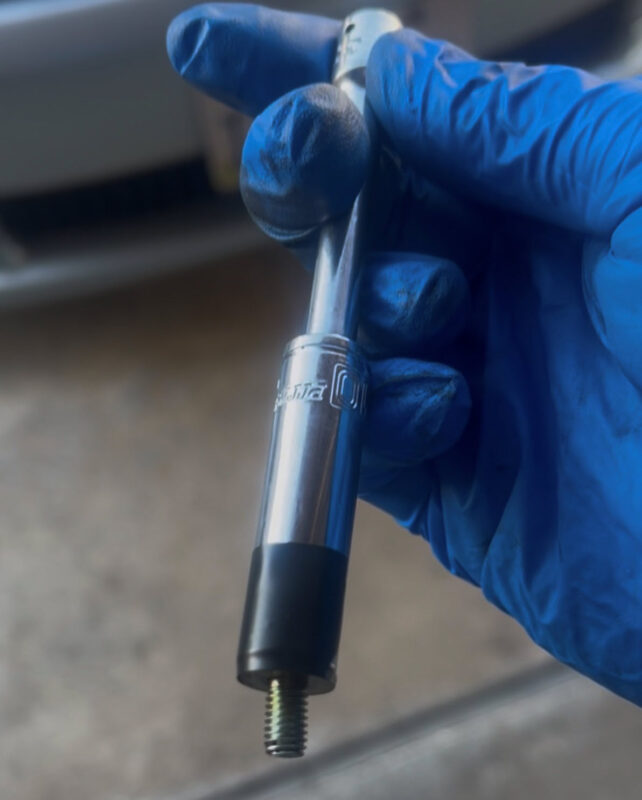
 
10mm bolt deep socket and tape to start the thread

Finish tightening the 10mm bolt with a 1/4″ flex head stubby ratchet and 10mm deep socket

1/4" stubby flex head ratchet with 10mm deep socket for vvti solenoid install tight space
1/4″ stubby flex head wrench with 10mm deep socket for vvti solenoid install


My Results: Better gas mileage in ideal conditions

I get my best results during long road trips (sustained driving) here are a few highlights:
 

Dyno Information


More about the VVTI Solenoid

VVT-i (Variable Valve Timing with intelligence) solenoid, also known as the oil control valve. This small but important part regulates oil flow to the cam phasers, allowing the ECU to advance or retard cam timing based on RPM, load, and throttle position.

In a factory setup, the stock VVT-i solenoid is designed for reliability, emissions compliance, and long service life. Over time, however, these solenoids can become sluggish due to oil contamination, internal wear, or weak electromagnetic response. When that happens, the engine may still run “fine,” but cam timing transitions can lag behind what the ECU is commanding. The result can be softer throttle response, inconsistent power delivery, or rougher operation during RPM changes.

A performance VVT-i solenoid is typically engineered to respond faster and more consistently than a tired OEM unit. By improving how quickly oil pressure is applied and released at the cam phaser, the engine can reach its target cam timing sooner. In theory, this leads to smoother transitions between low-RPM torque and high-RPM power, especially during acceleration and gear changes.

For Toyota engines that rely heavily on VVT-i—such as many four-cylinder and V6 platforms—this quicker response can make the engine feel more “awake.” Drivers often describe improved throttle crispness, smoother mid-range pull, and better consistency under varying loads. On modified or boosted setups, where precise cam timing is even more important, a faster-acting solenoid may help the engine behave more predictably as conditions change.

That said, it’s important to keep expectations realistic. A performance VVT-i solenoid does not change cam timing targets on its own. The ECU still controls when and how much timing advance or retard is applied. Without tuning changes, any gains come from reducing delay and inconsistency—not from unlocking new timing strategies or adding horsepower outright.

In practice, upgrading to a performance VVT-i solenoid makes the most sense as part of a broader maintenance or performance plan. If your engine has high mileage, sees aggressive driving, or relies on precise cam control due to other modifications, a higher-quality solenoid can help restore or sharpen engine response. Think of it less as a power mod and more as a refinement—one that helps your Toyota’s VVT-i system do exactly what the ECU is asking, when it’s asking for it.


Disclaimer | Report Error